Booking a Visit
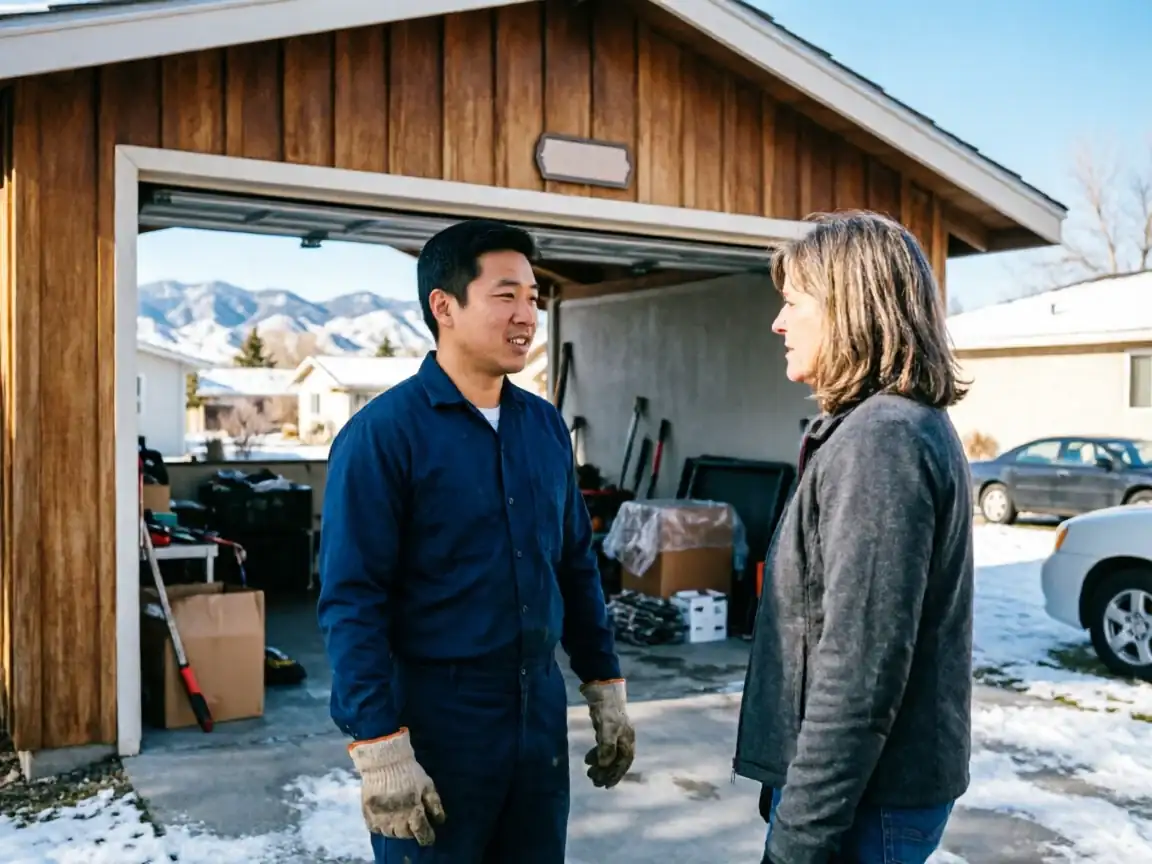
Shepherd sits about 15 miles from our shop in Billings, so when you call about a door that's jumped its track, tell us right away that you're out this direction - it changes how we load the truck. We bring extra rollers and a spare length of track section on jobs out here, because the original hardware on a house built in the late 1980s is usually still the hardware on the door today, and it's rarely a size the big box stores carry anymore. We don't run a branch in Shepherd itself; every call is covered from Billings, so give us a general idea of when you're home so we're not guessing at a window.
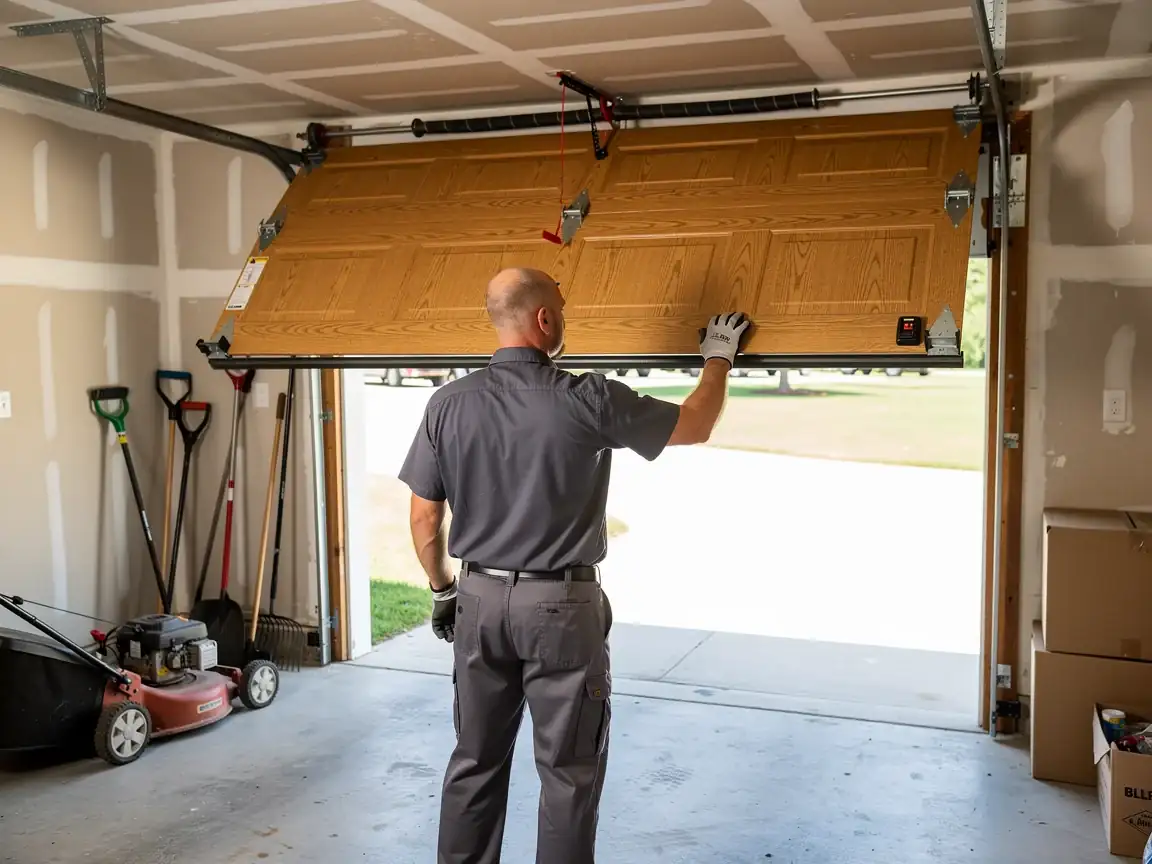
If the door is already off the track and hanging crooked, don't try to force it back by hand before we get there - that's the fastest way to bend the track further or pull the bracket out of the jamb. A photo texted ahead of time, showing which side the door has dropped on, helps us bring the right parts the first time instead of a second trip.
The Symptom
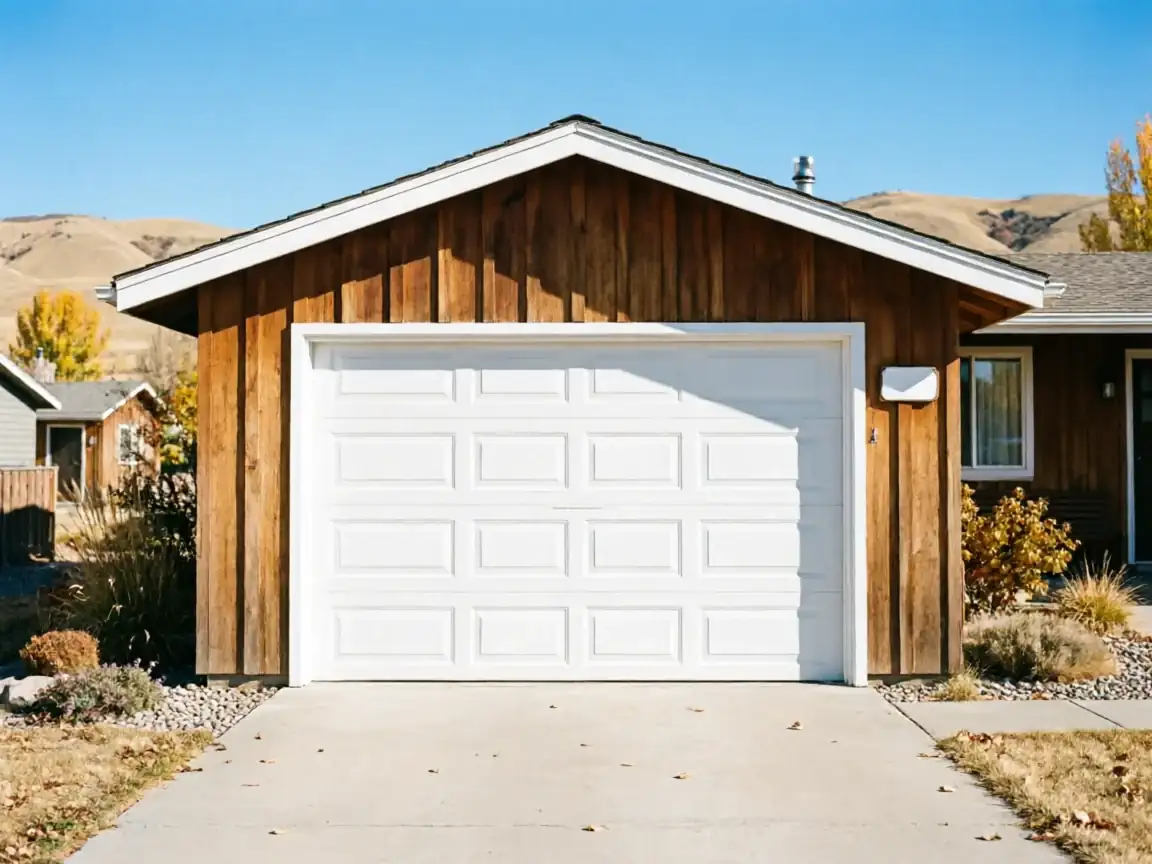
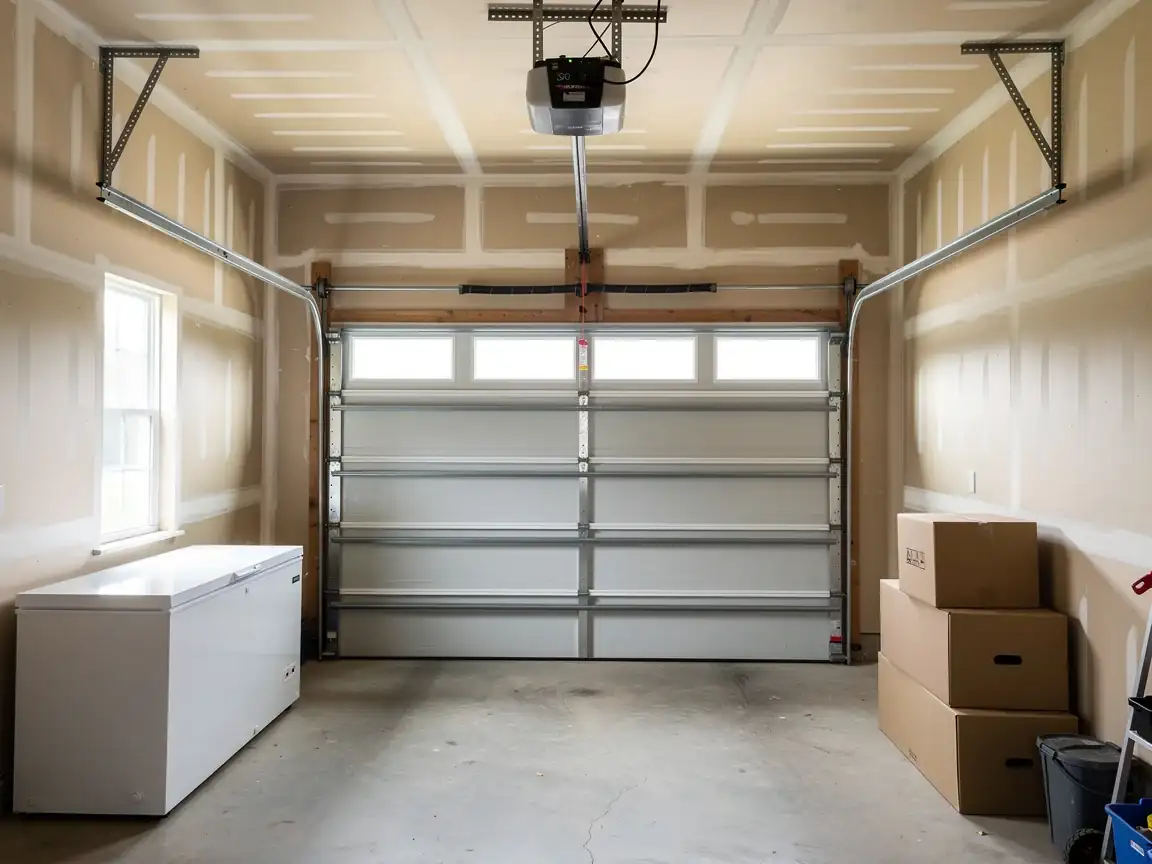
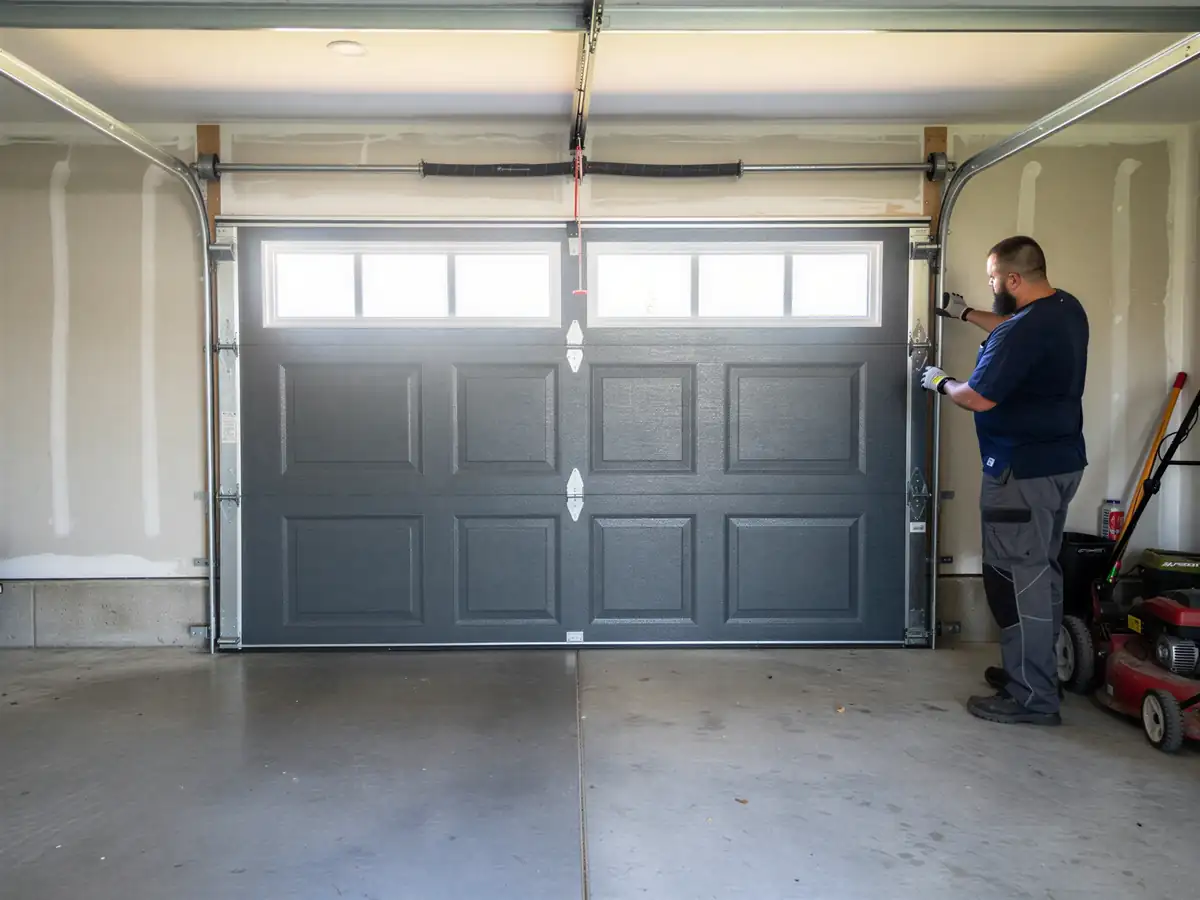
Most garages in Shepherd went up in the late 1980s - the area's median build year runs right around 1988, consistent with the 1980s-90s housing stock common across the wider Billings service area. That means a steel sectional door, usually two or three panels wide for a single bay, hung on galvanized roller track bolted to wood jambs rather than the engineered steel framing you'd see in newer construction. The track on these doors is thinner-gauge than what goes in today, and after three decades of Montana winters it's often already slightly out of true before anything actually fails.
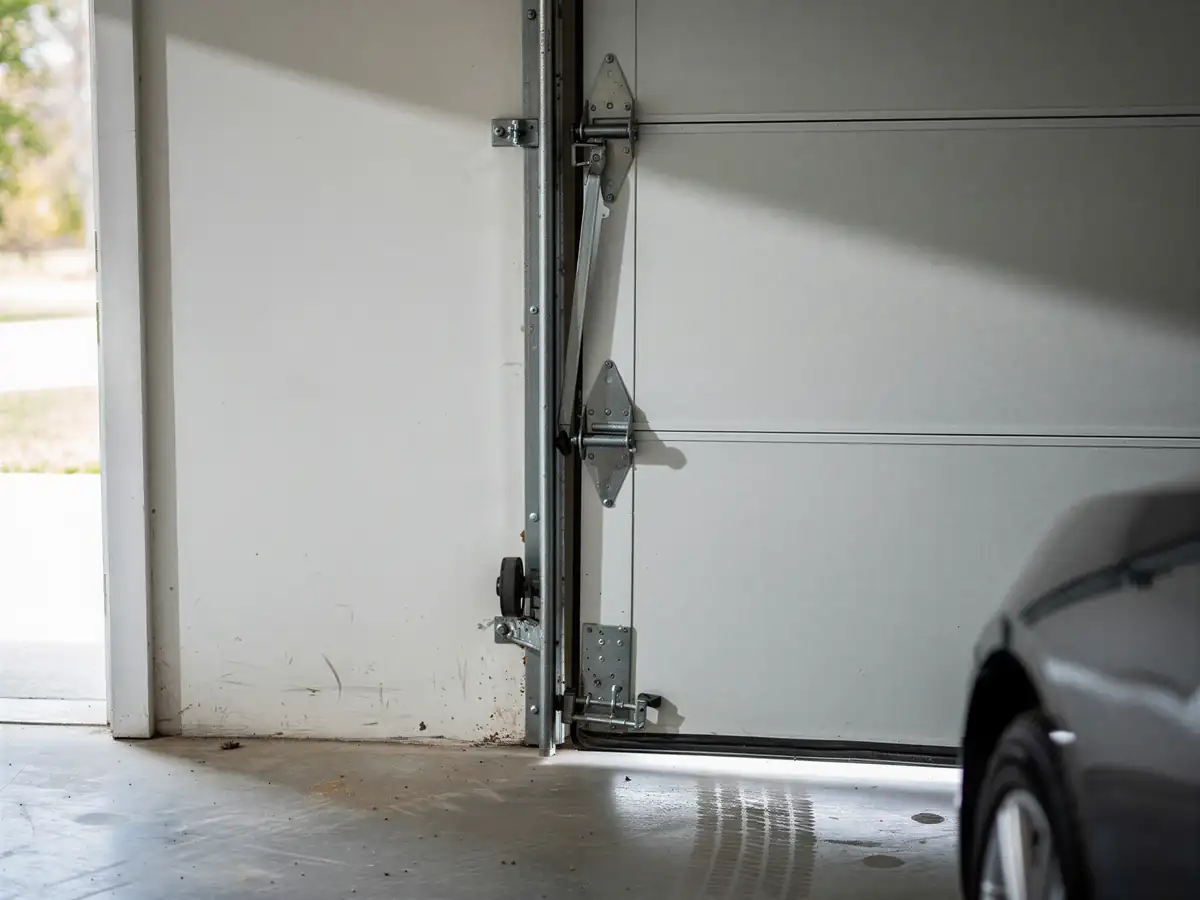
An off-track door here usually shows up one of two ways: the door hangs at a visible angle with a gap at the top corner, or it stops moving a few inches into the cycle and the opener strains against it. Either way, a roller has left the track, or the track itself has pulled away from the jamb. Severe cold makes both more likely - steel contracts, lubricant stiffens, and a roller that was marginal in August lets go the first hard freeze.
What the Fix Involves
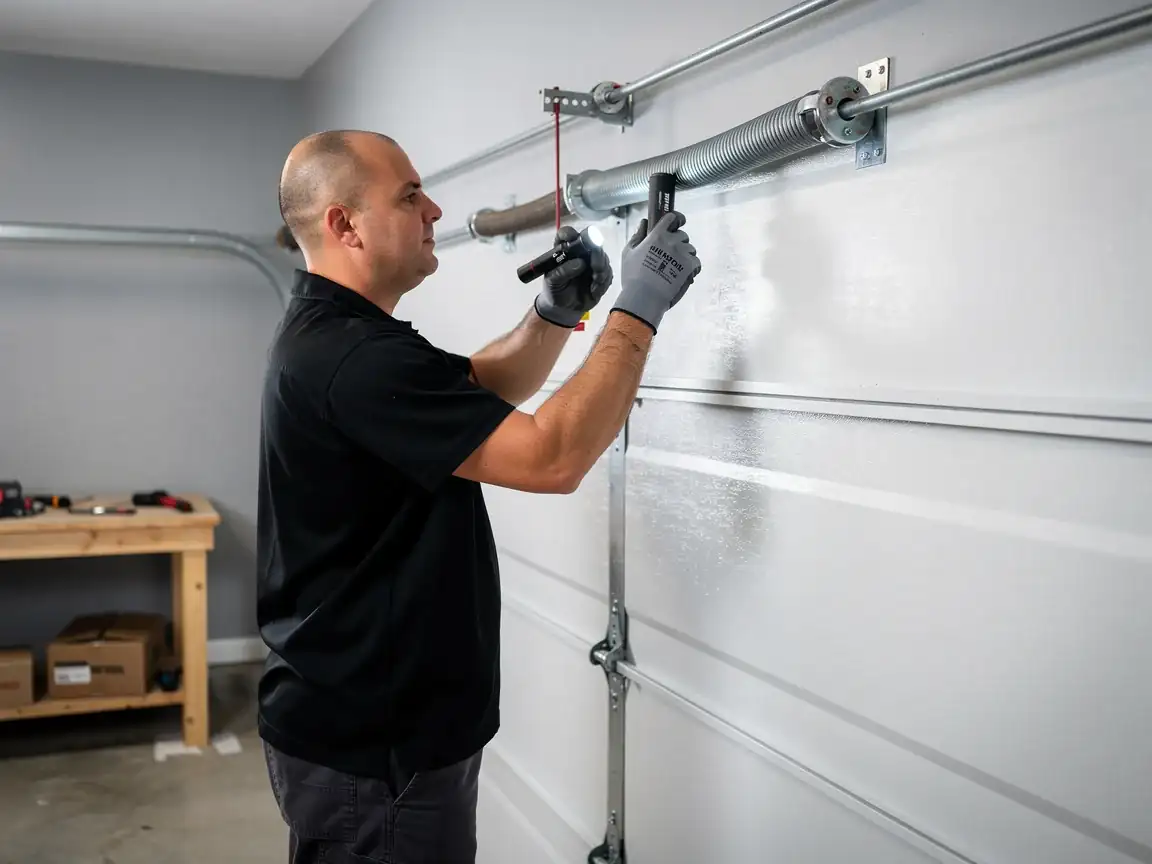
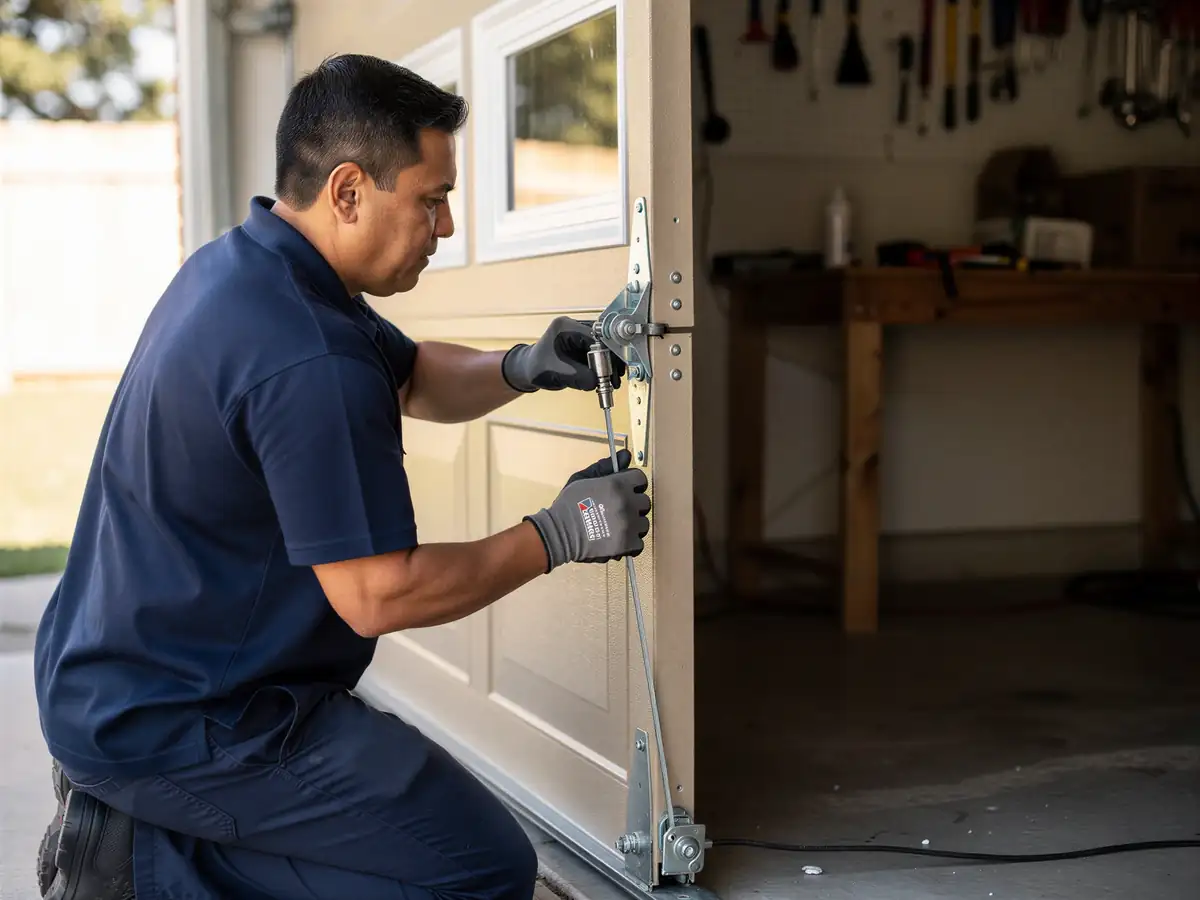
On a 1980s door, fixing an off-track panel starts with checking whether the track is just bent or whether a bracket has worked loose from the jamb
On houses this age, the wood behind the bracket has sometimes dried and shrunk enough that the original screws no longer bite. We re-seat the door, check both tracks for square, and replace any rollers that have flat-spotted or cracked, which is common once galvanized track hits the 30-year mark and wasn't greased often.
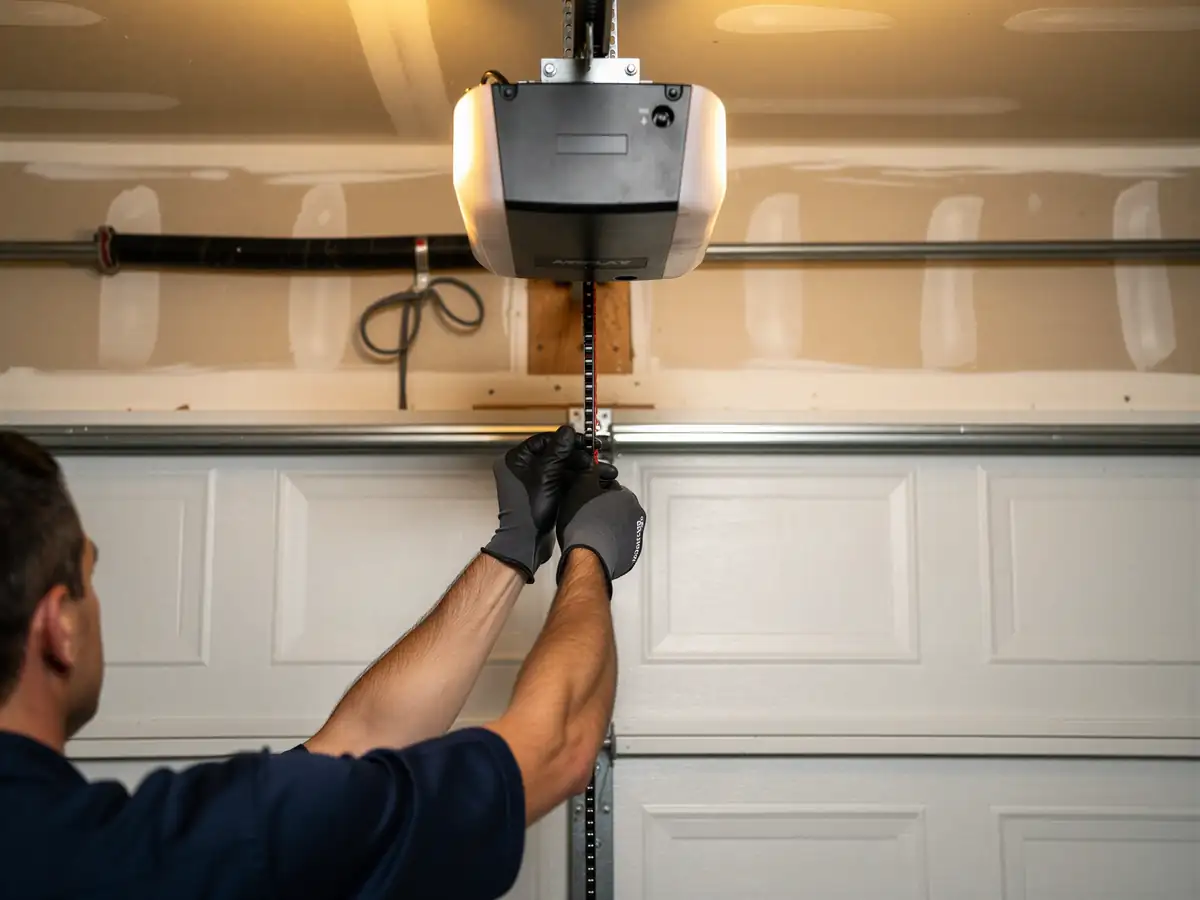
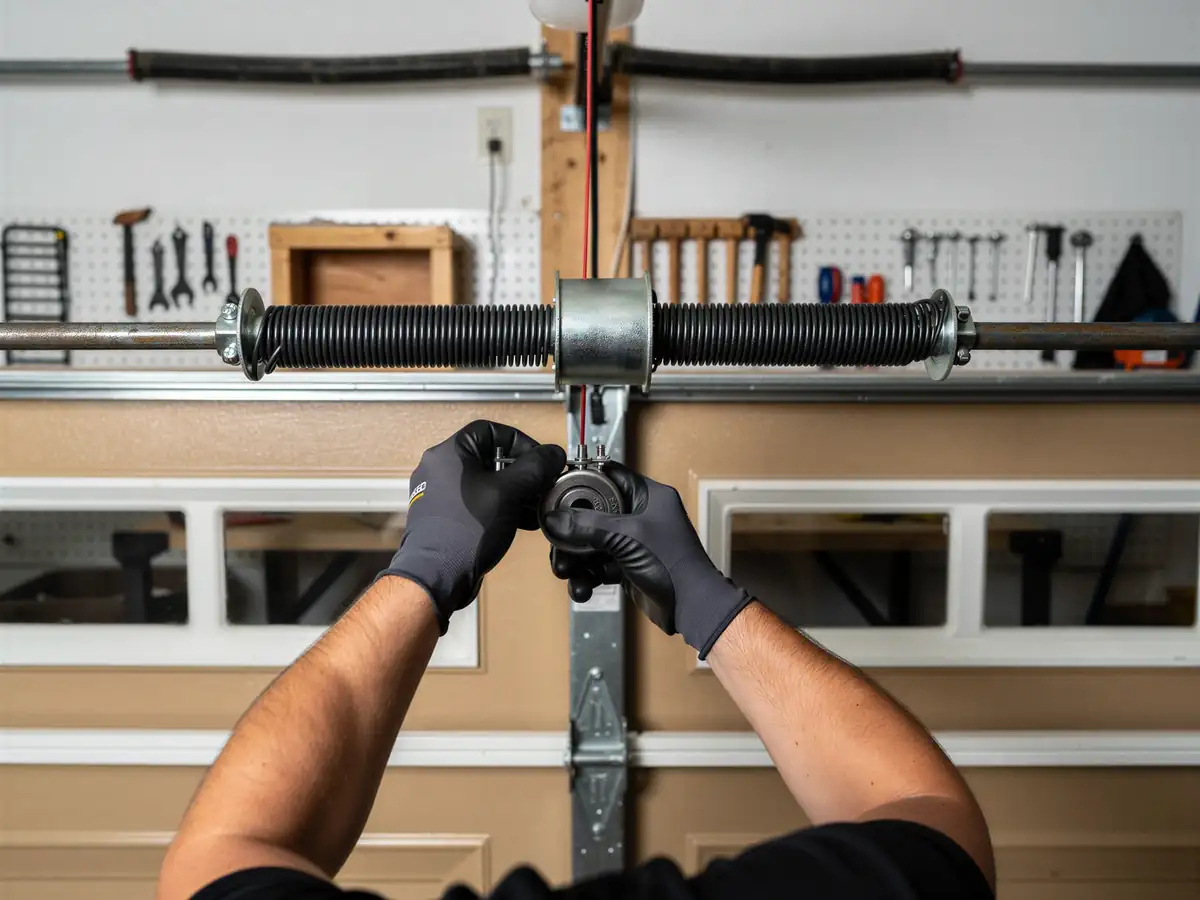
We also check the cable and spring while the door's open
Since an off-track door on a double-panel garage often means a cable has slipped its drum - fixing the track without catching that gets you a second call within the month. If the track itself is bent rather than just loose, we replace that section instead of trying to hammer it straight; straightened track holds for a while and then fails again at the same spot, almost always during the next cold snap.
Doing It Yourself
If the door is only partway off - a roller out of the track but the panel still mostly in line - you can sometimes walk it back in by hand with the opener disconnected, working slowly and checking that nothing's binding. Past that, we'd rather you call. A sectional door on 1980s track weighs enough, and the spring tension behind it is high enough, that a panel coming free while you're under it is a real risk, not a theoretical one.
We won't talk you through re-tensioning a torsion spring over the phone, and we won't recommend forcing a bent track back into shape with a pry bar - both of those end in a trip to urgent care more often than a fixed door. What you can safely do yourself: check whether the track bolts at the jamb have backed out, since that's a five-minute tighten with a socket wrench and sometimes the whole problem.
Where This Job Goes Sideways
The job gets more expensive when the off-track panel has also dented or bowed the steel skin - on a door this age, replacement panels for a two- or three-panel steel door from the late 1980s aren't always in stock, since manufacturers have changed panel profiles more than once since then. We can usually match close enough that it's not obvious, but getting an exact match sometimes means a lead time we don't control.
It also goes sideways when a homeowner's had the door run off-track more than once already. Repeated derailment on the same door usually means the track itself has a permanent bow from an old impact, or the opener's travel limits were never set right after a previous repair. Patching that a third time isn't worth your money - at that point we'll tell you straight that new track, or in some cases the whole door, costs less over two years than another string of service calls.