The Cost of This Job
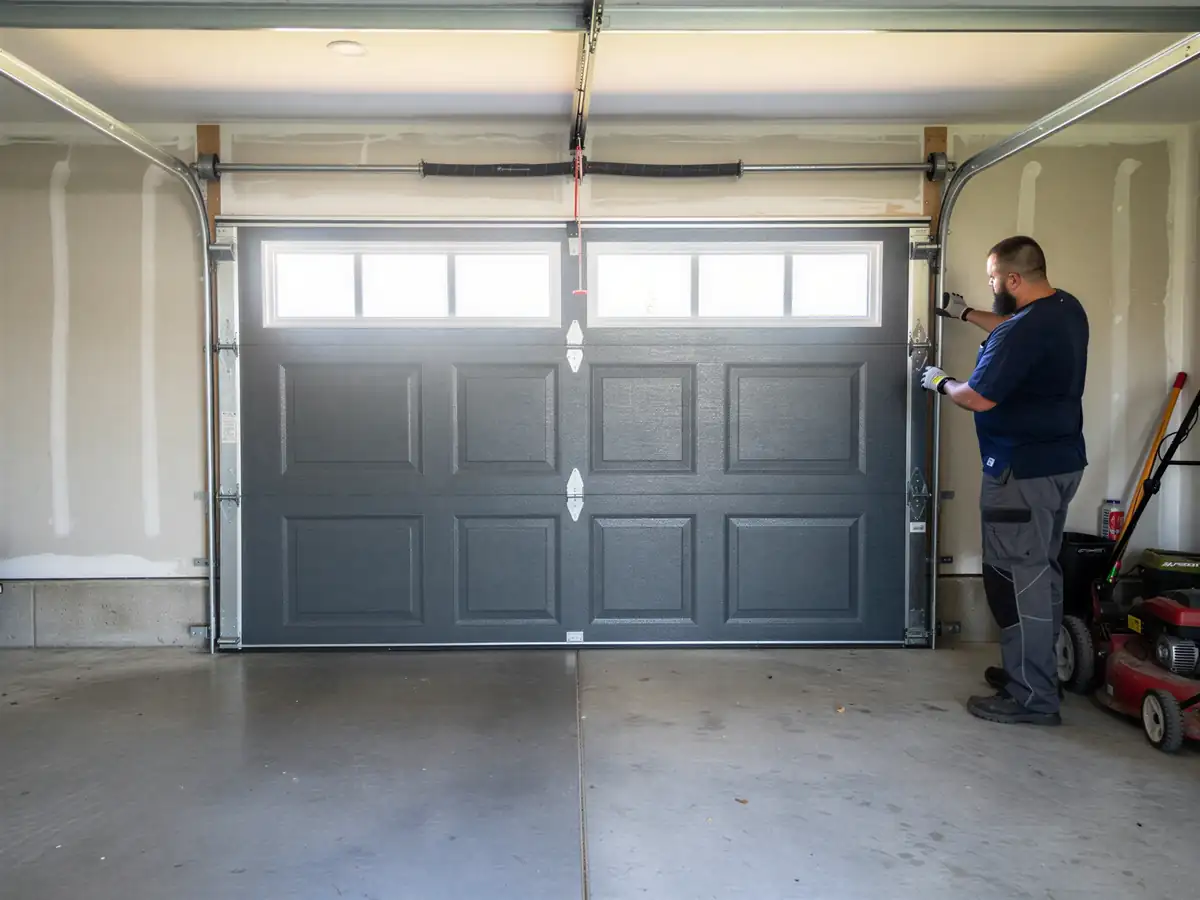
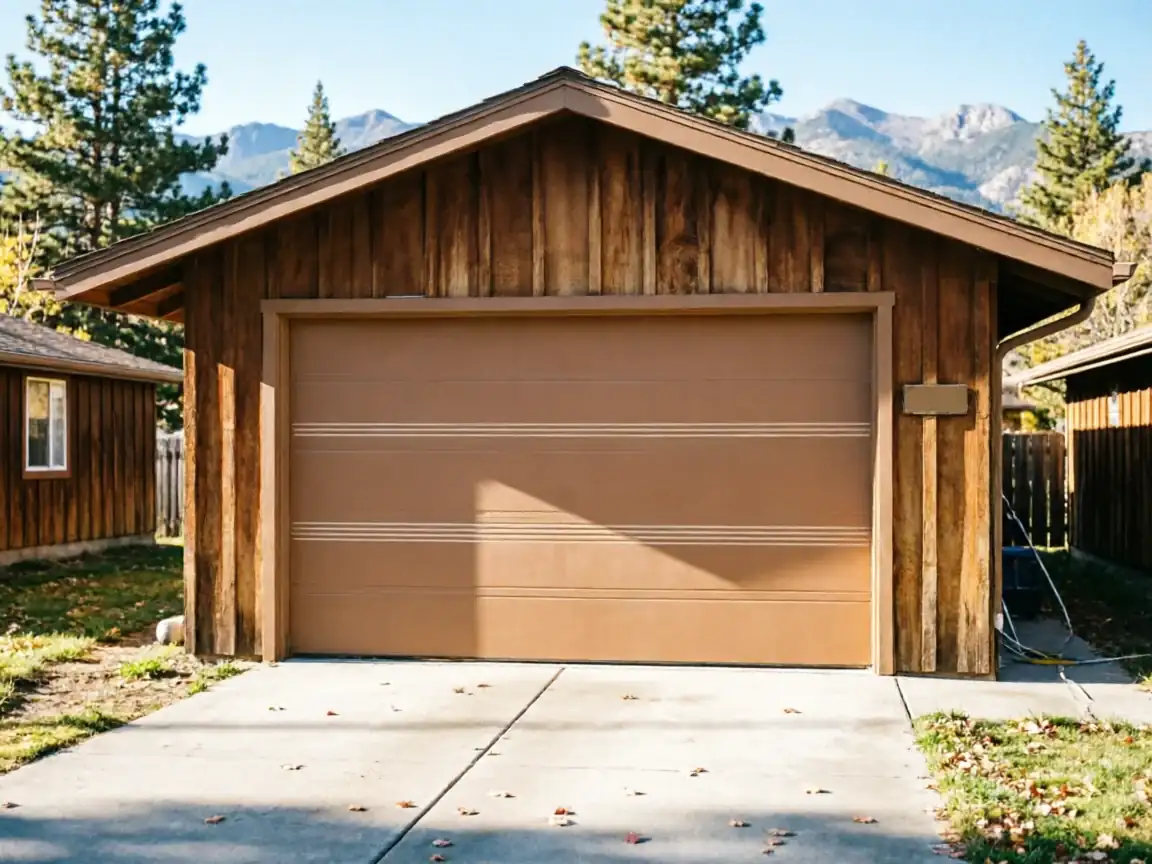
We can't give you a number over the phone for an off-track door, and we won't pretend otherwise. What it costs depends on whether the track just needs re-hanging, whether a roller bracket snapped, or whether the panel itself got bent when the door came off the rail. In Lockwood that last part matters more than it does on newer builds, because a lot of these garages went up around 1982, a few years ahead of the 1985 median for the wider service area. Doors from that era run narrower track and lighter steel brackets than anything built in the 90s, and those brackets don't flex - they crack. A cracked bracket on a door this age usually means replacing the hardware, not just straightening it back into place.
The honest limitation: if the track is bent more than an inch or two out of true, or the panel bowed when the rollers came out, re-hanging the door isn't worth doing. At that point you're paying twice - once for the patch, again later for the real fix. We'll tell you straight if that's where you're at instead of running up a bill on a repair that won't hold.
Where This Job Goes Sideways
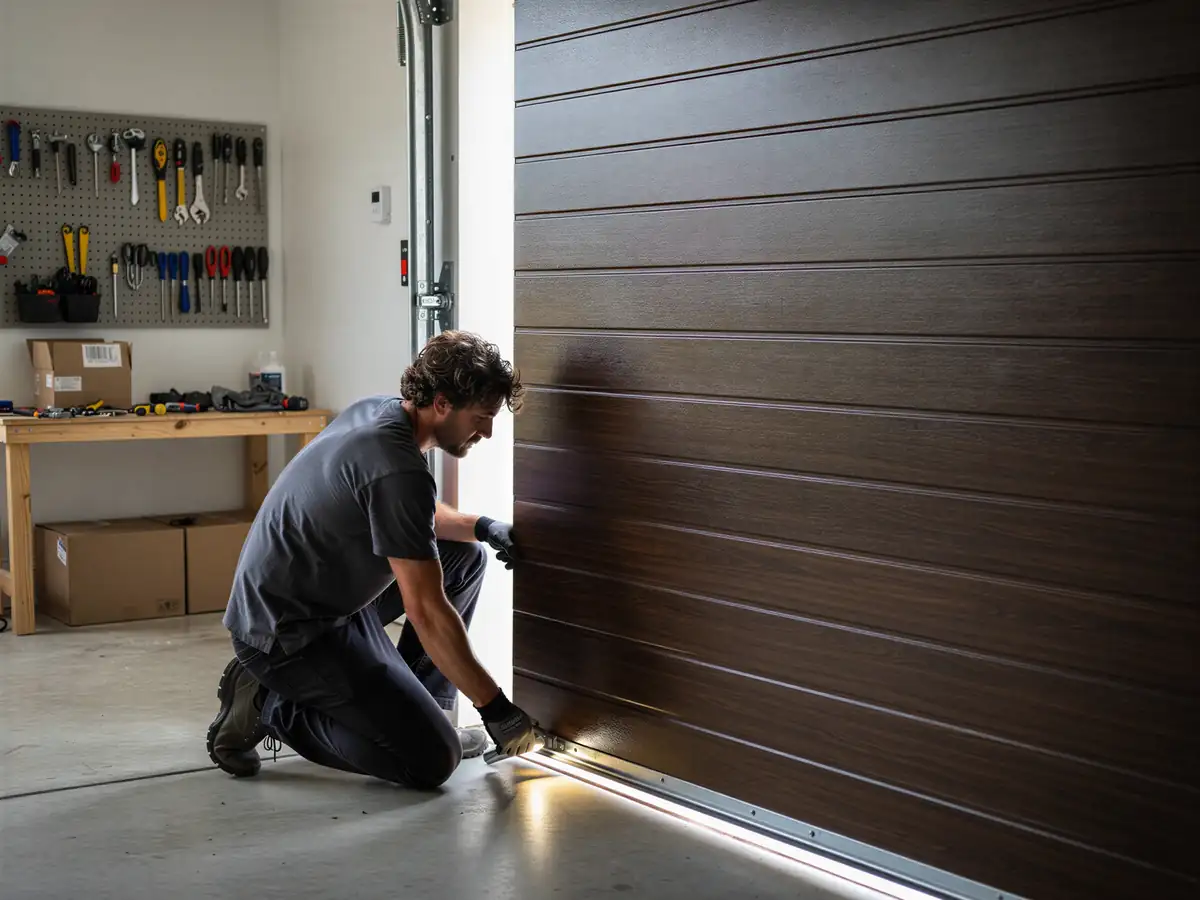
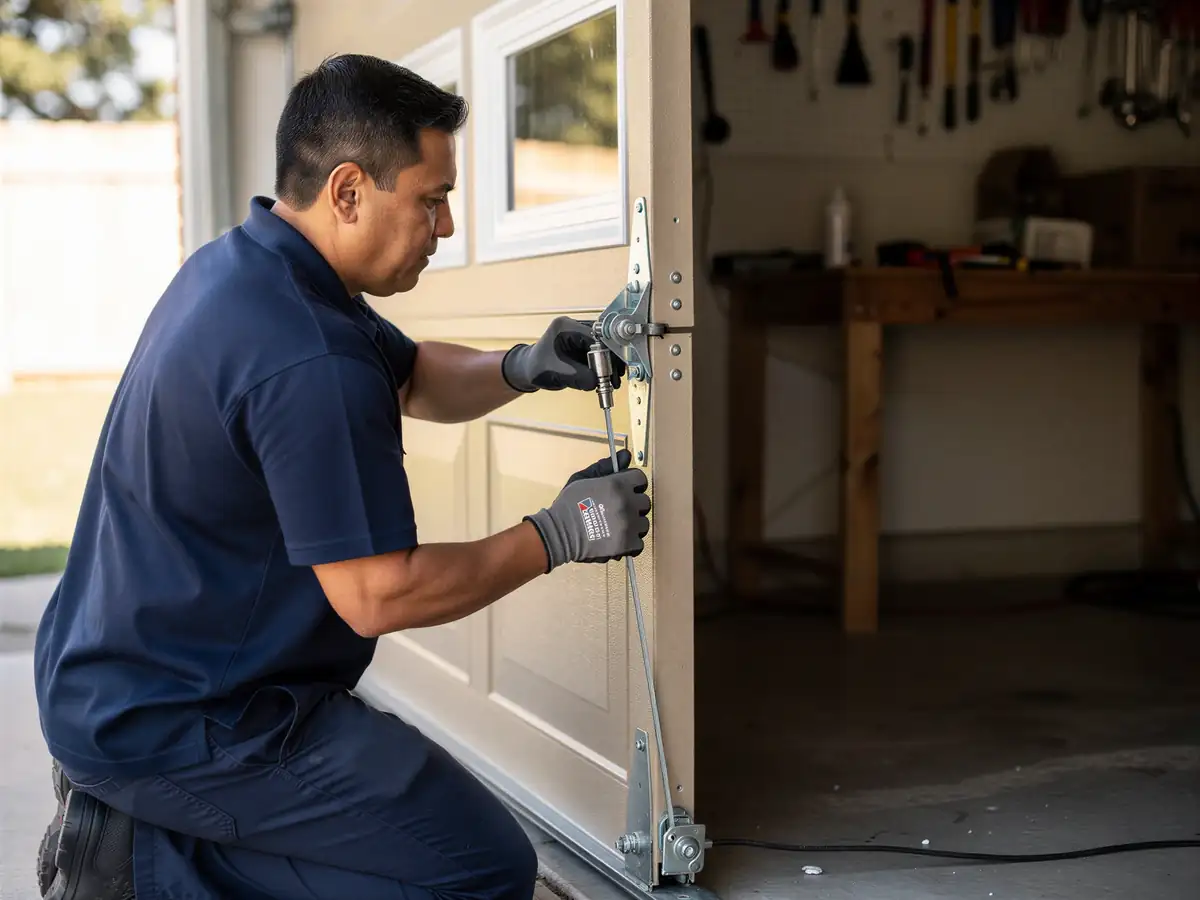
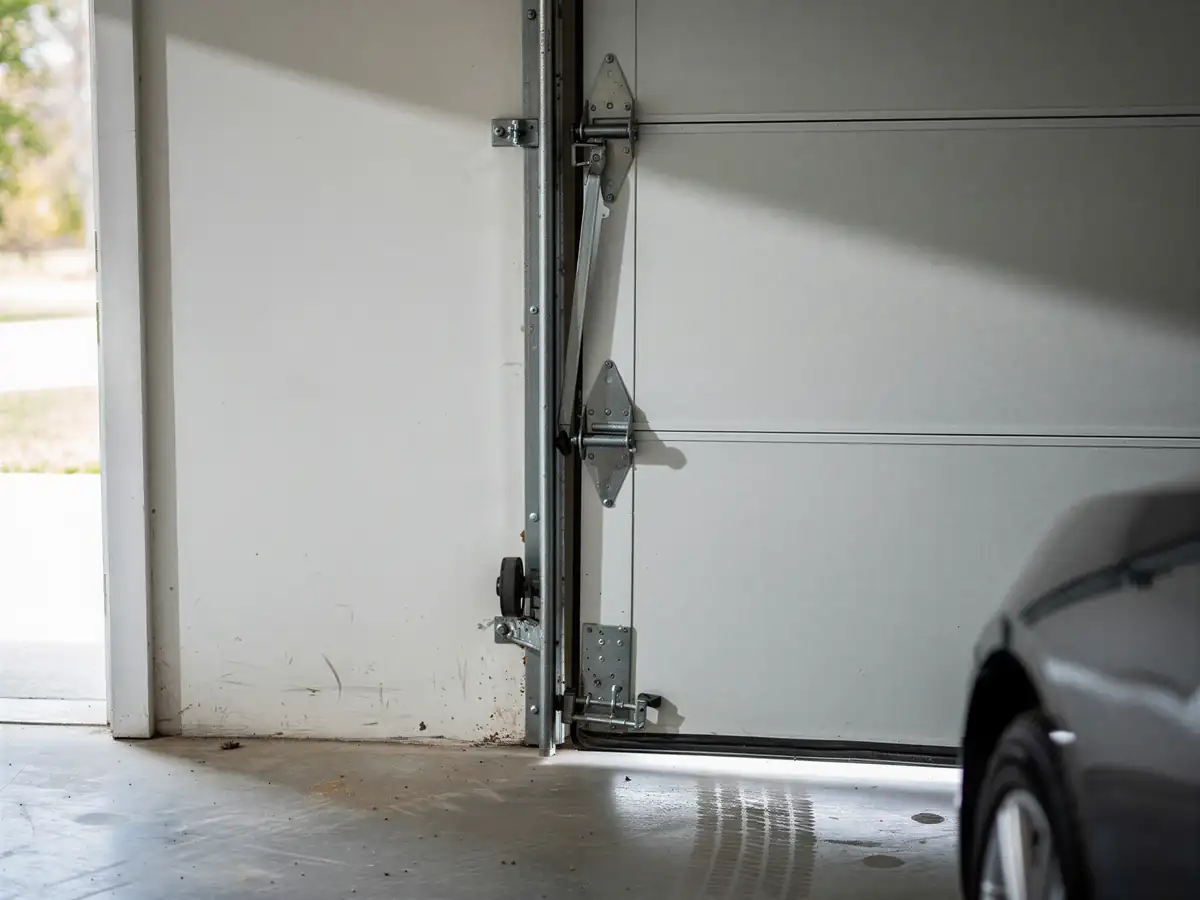
Most off-track calls in Lockwood start the same way: a roller jumps the track, usually on the bottom section, and the door either jams halfway or hangs crooked from one cable. On a door built around 1982, the roller brackets are stamped steel, spot-welded to the track rather than bolted, and once one of those welds fatigues, the whole bracket can tear free instead of just bending. That's different from what we see on doors built after the mid-90s, which use a wider rail profile and bolted brackets that usually survive the same hit.
With close to 2,741 households in the area, we see this pattern often enough to know it's not bad luck - it's the hardware. A door that's been running fine for decades can go off-track from something as small as a dropped cable tension or a roller that's finally worn down to bare metal. The failure point is almost always the same handful of parts, which is why we carry what fits this era of door rather than assuming everything on the truck matches a newer build.
What Is on the Truck
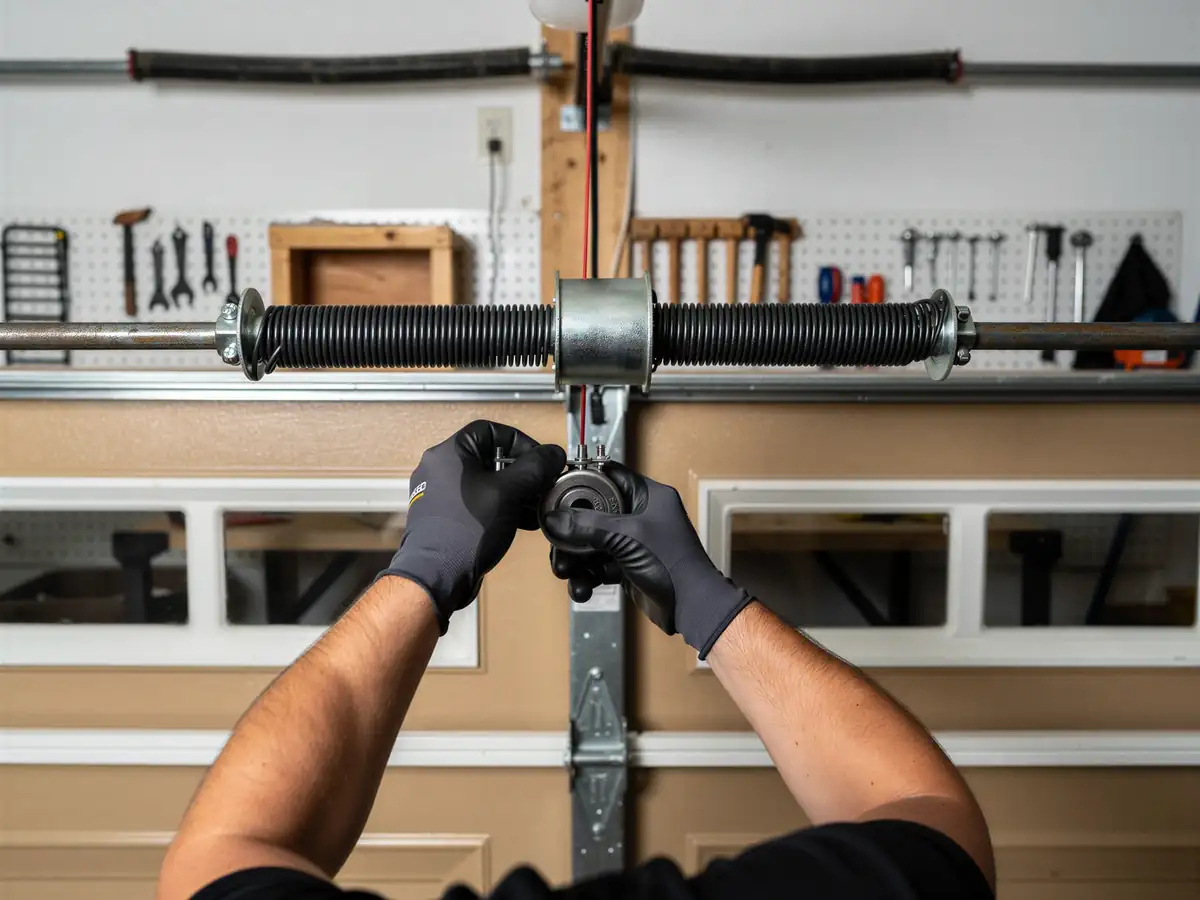
Because a lot of Lockwood's garages carry original extension-spring doors instead of torsion setups
The truck is stocked for both - narrow-rail track sections, the stamped roller brackets that match an early-80s door, and the wider bolted brackets for anything built later. Rollers come in both the old-style open-bearing version and the sealed nylon ones most newer doors use now.
We also keep end bearings, cable, and the lag hardware that holds track to jamb
Since on a door this age the wood jamb itself is sometimes the real problem - the track pulled loose from the frame, not just off its own rail. What we don't carry is a stock of full replacement panels; those are special-order and take time to get in, so if a panel's bent beyond fixing, that part of the job won't be same-day no matter how close the run from Billings is.
The Symptom
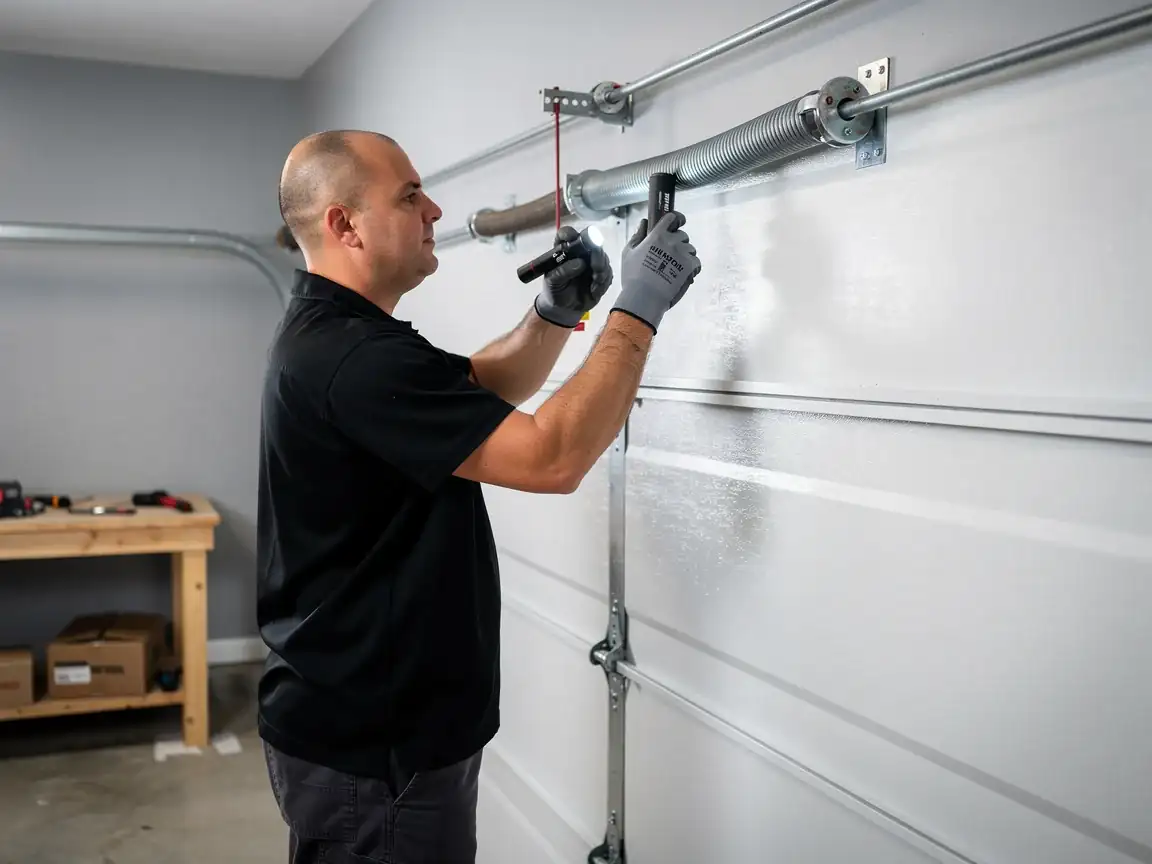
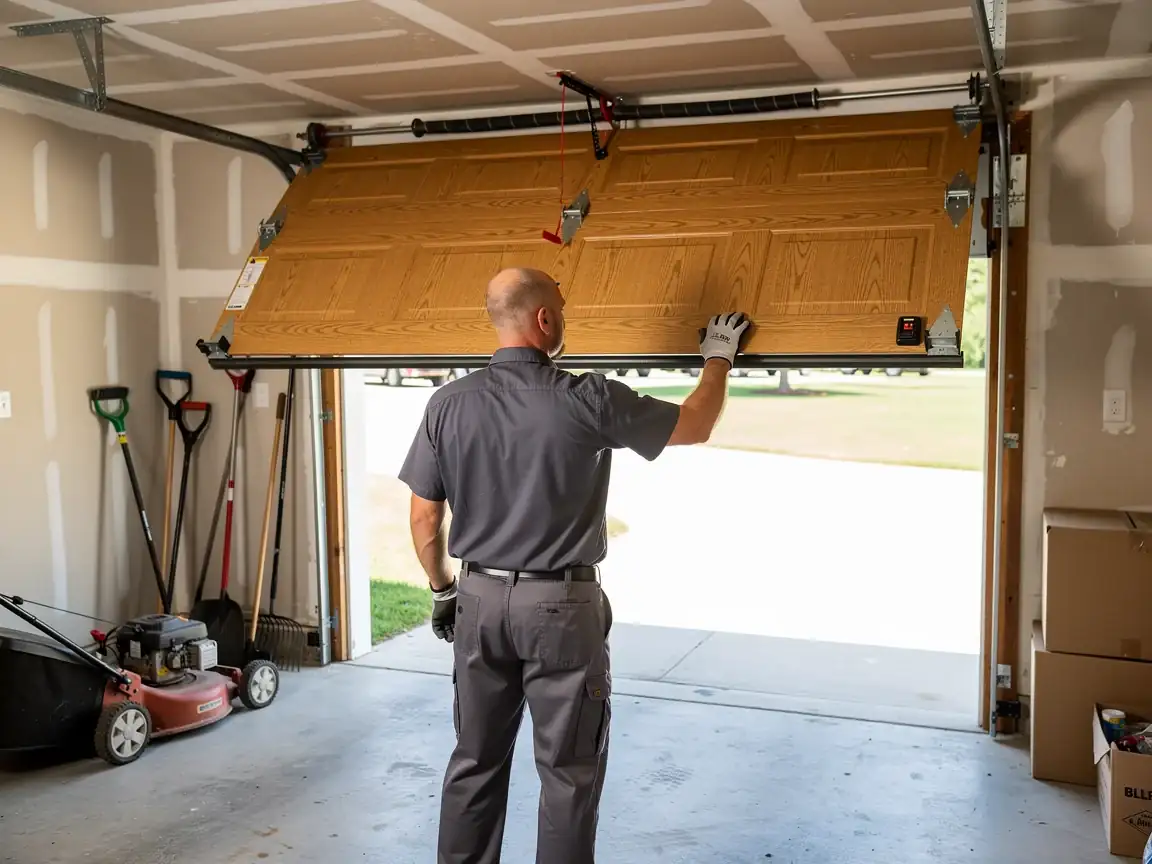
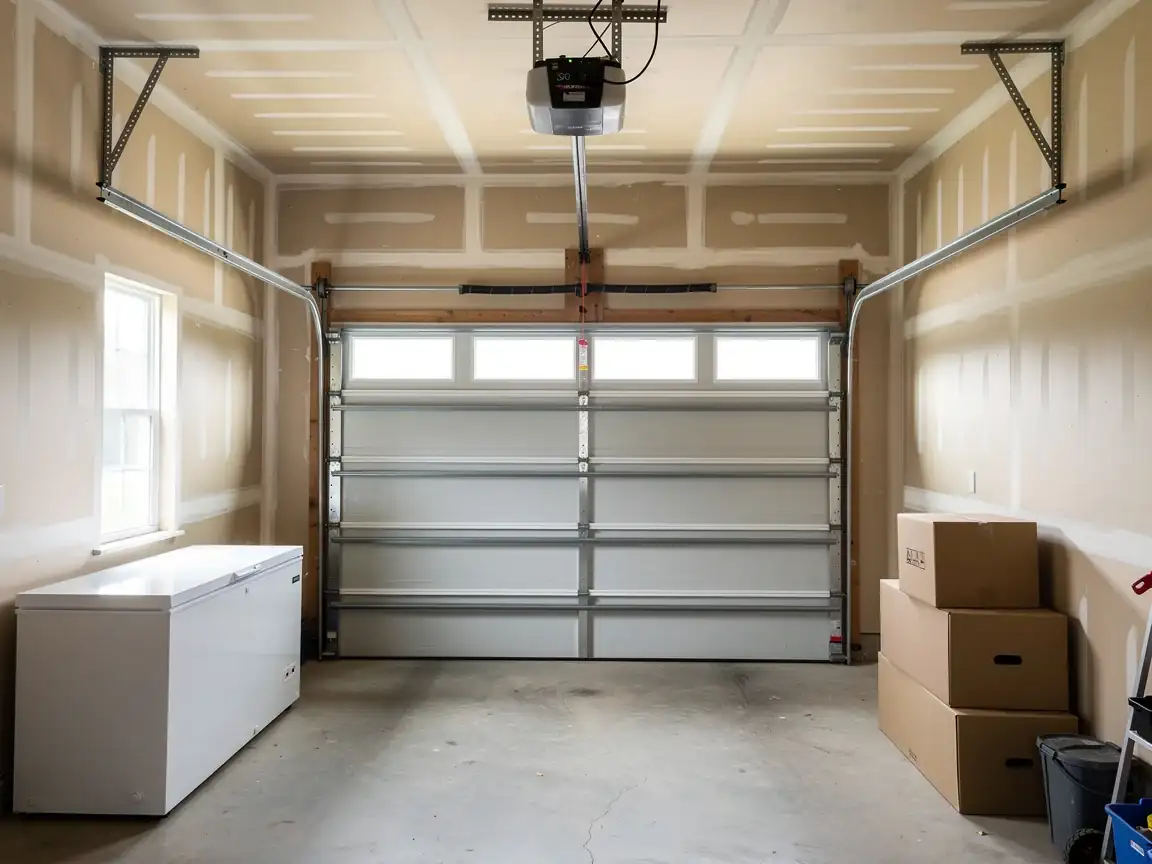
The giveaway is usually one of three things: the door hangs at an angle instead of sitting level in the opening, it binds and stutters partway up instead of running smooth, or one cable goes slack while the other stays tight. Sometimes you'll hear it before you see it - a grinding or popping sound right as the door starts to move, which is usually a roller riding the edge of the track instead of sitting inside it.
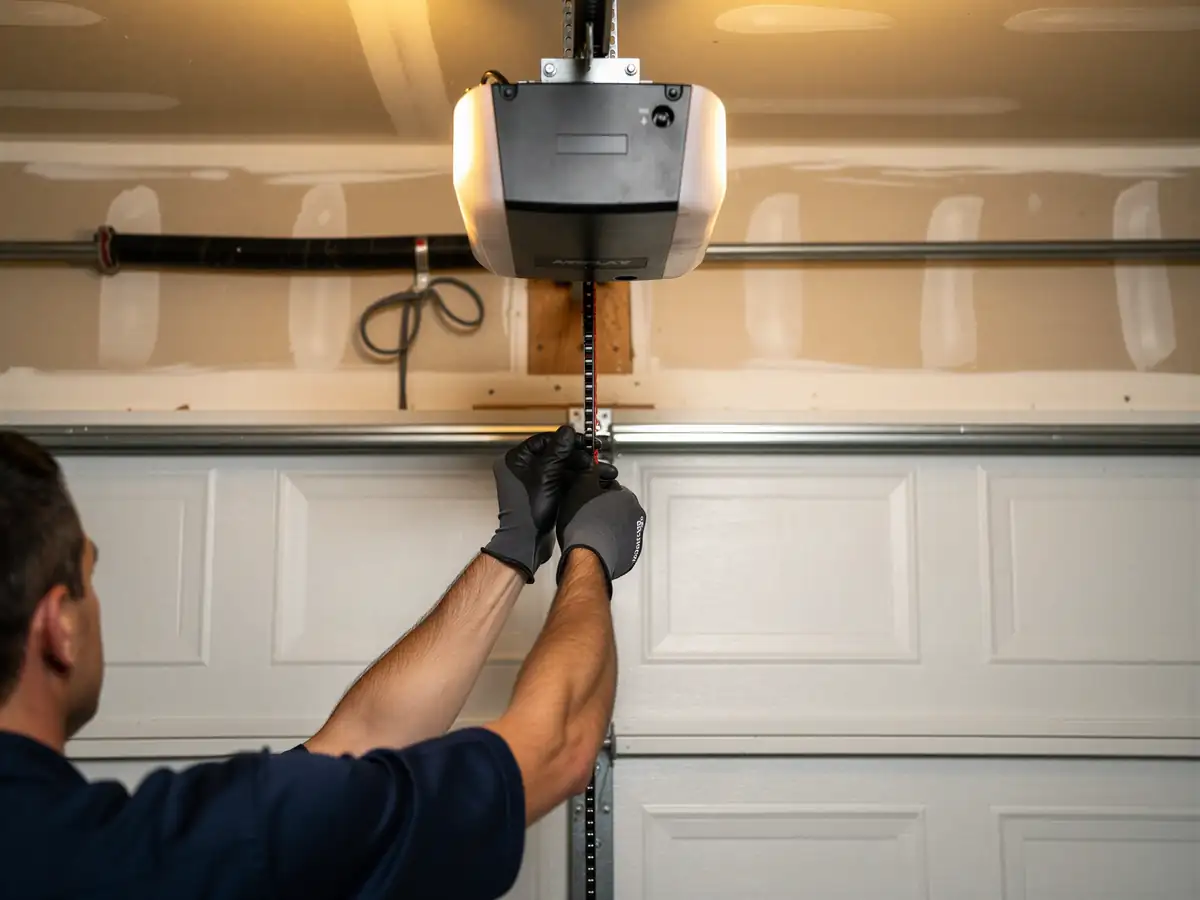
If the door came off the track from cold-weather stiffness rather than a worn part, it can look the same from the outside but behave differently once we're inside the opener housing. Either way, don't force the door up or down by hand once it's binding - that's how a cracked bracket turns into a bent track, and a bent track on a door this age usually means hardware we have to special-order rather than carry on the truck.