Where This Job Goes Sideways
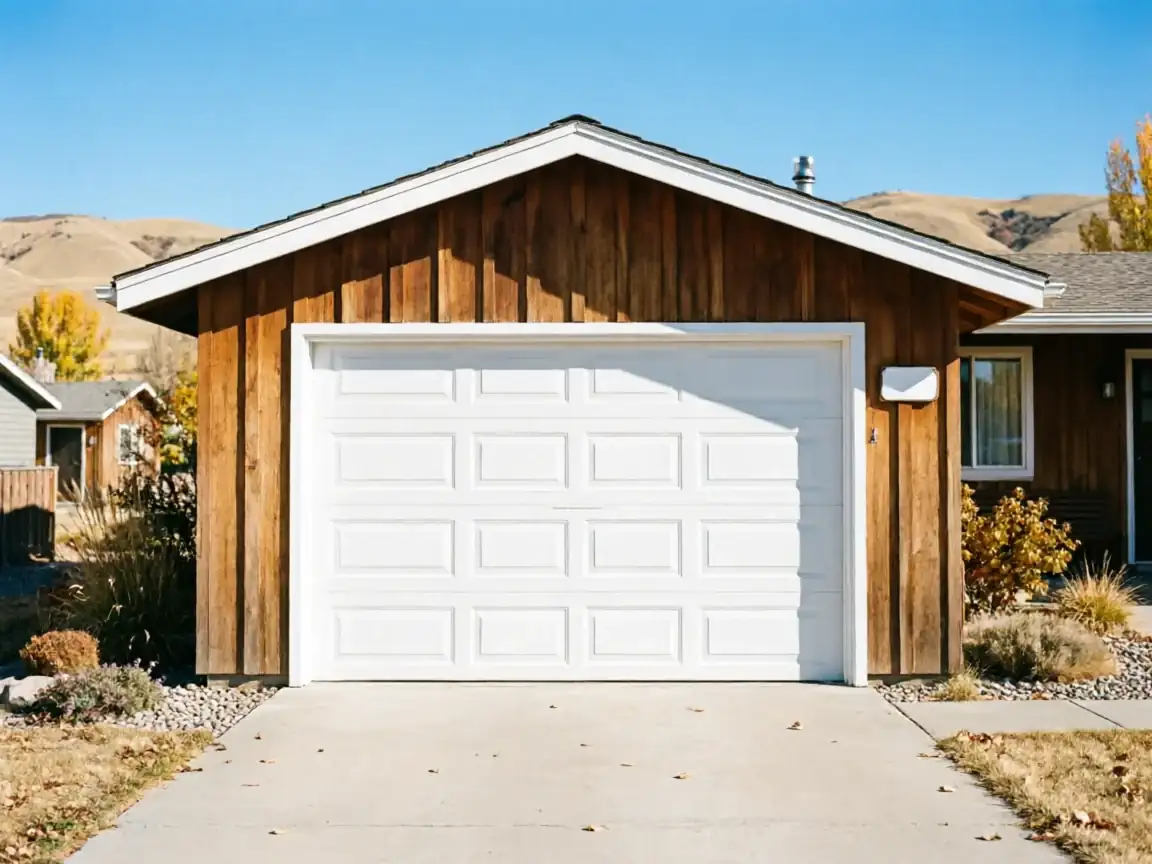
Laurel is a small town - about 3,088 households - which means the fleet of garage doors here isn't huge, but it's consistent. A lot of these houses went up close to 1973, and that's the number that matters more than anything else on this page. Doors and openers installed in the 1970s used different spring sizing and different mounting hardware than what shows up at the big box store today. When a torsion spring breaks on one of these original setups, or a cable frays off a drum that's been working since the Ford administration, the replacement part isn't always a straight swap. We see it most on the original single doors that never got upgraded to a wider two-car opening, and on openers that have been replaced once already but left the old track and drum in place. That mismatch - new motor, old hardware - is where a lot of service calls in Laurel start. It's not a big market, so a shop that doesn't travel out here regularly won't have seen this particular combination enough times to know what's coming before they pull the door apart.
What the Fix Involves
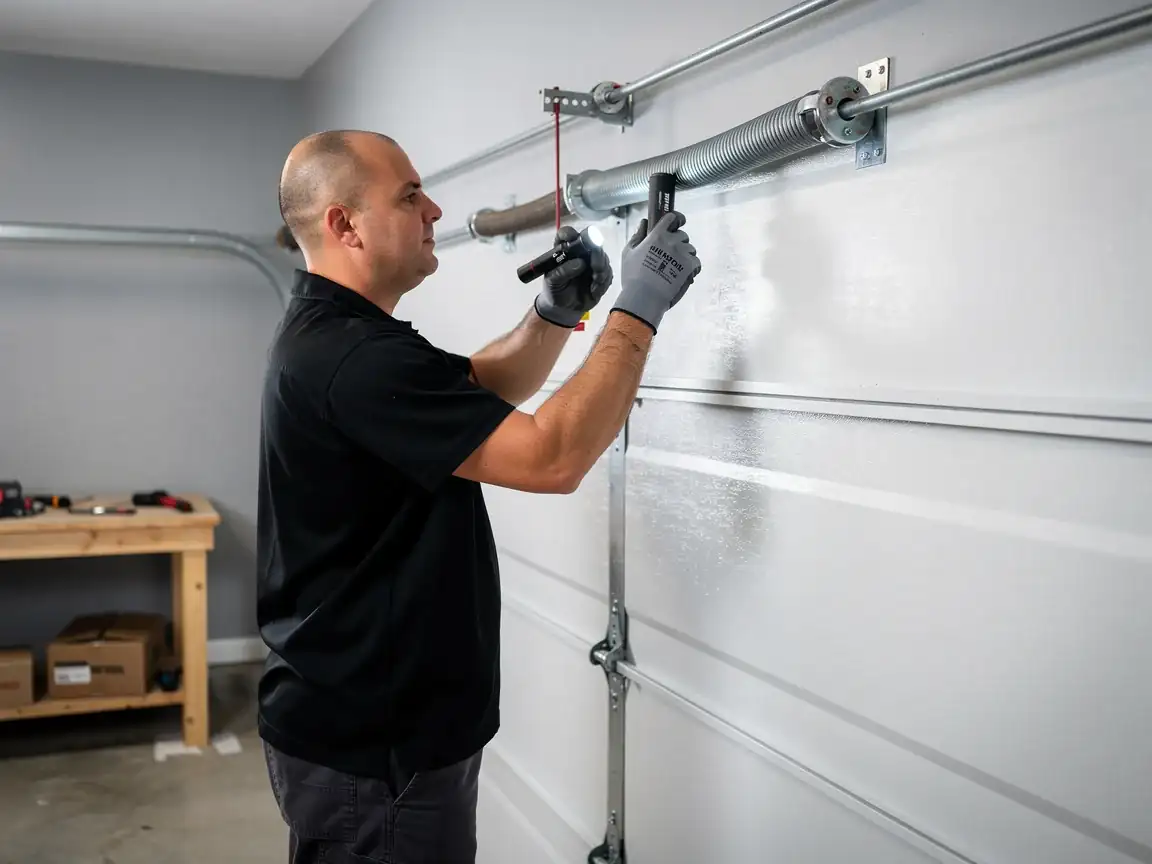
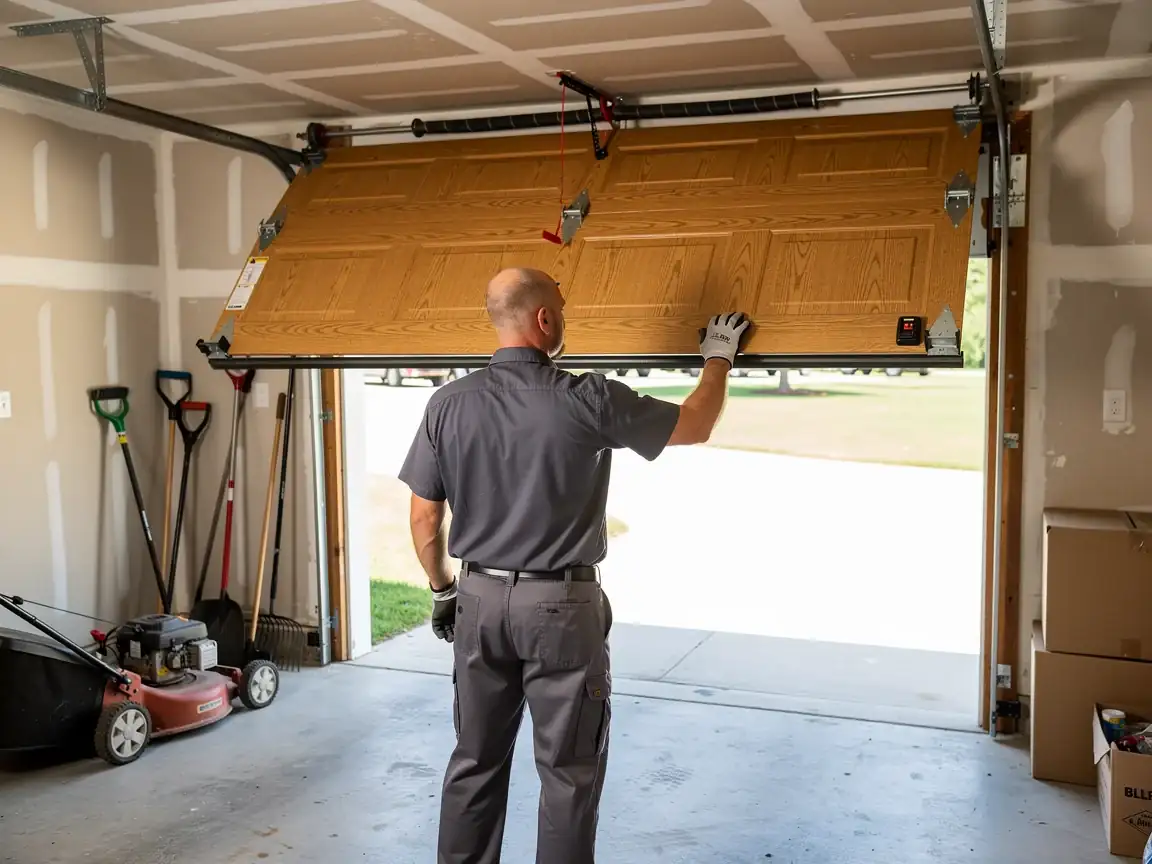
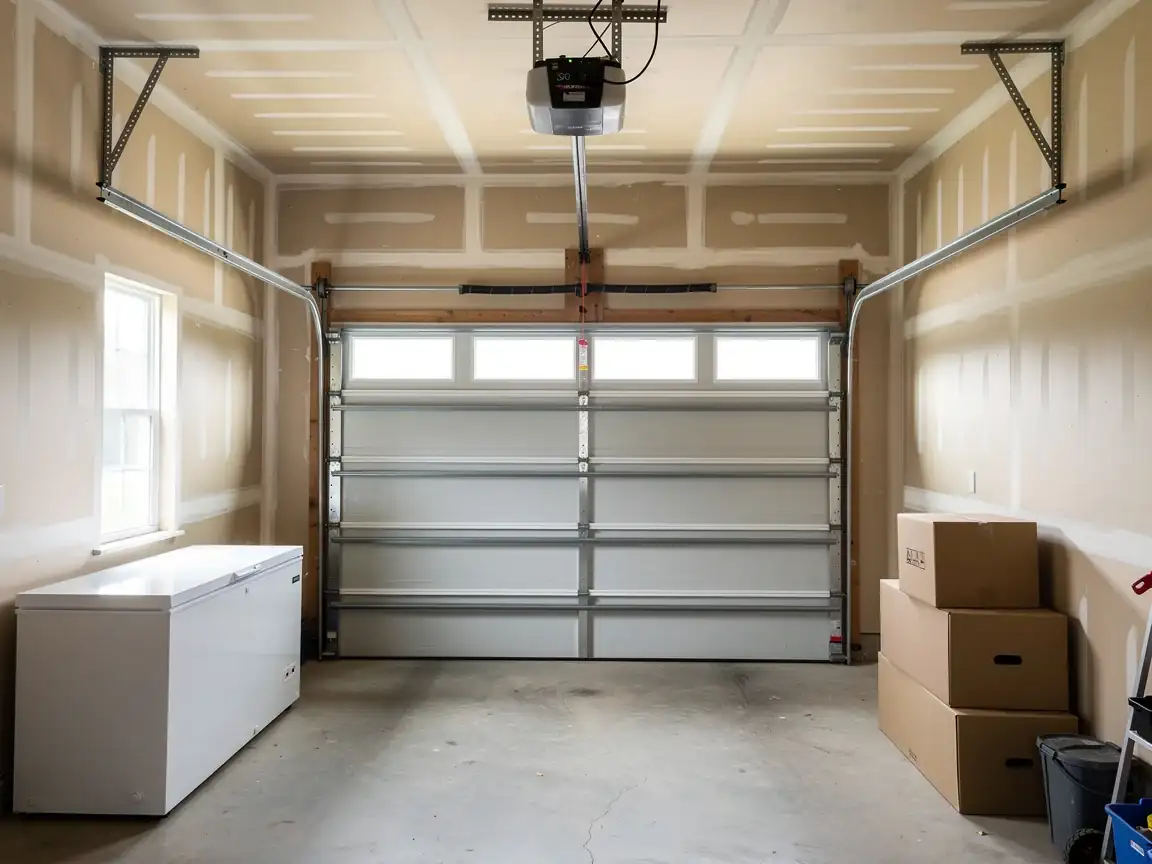
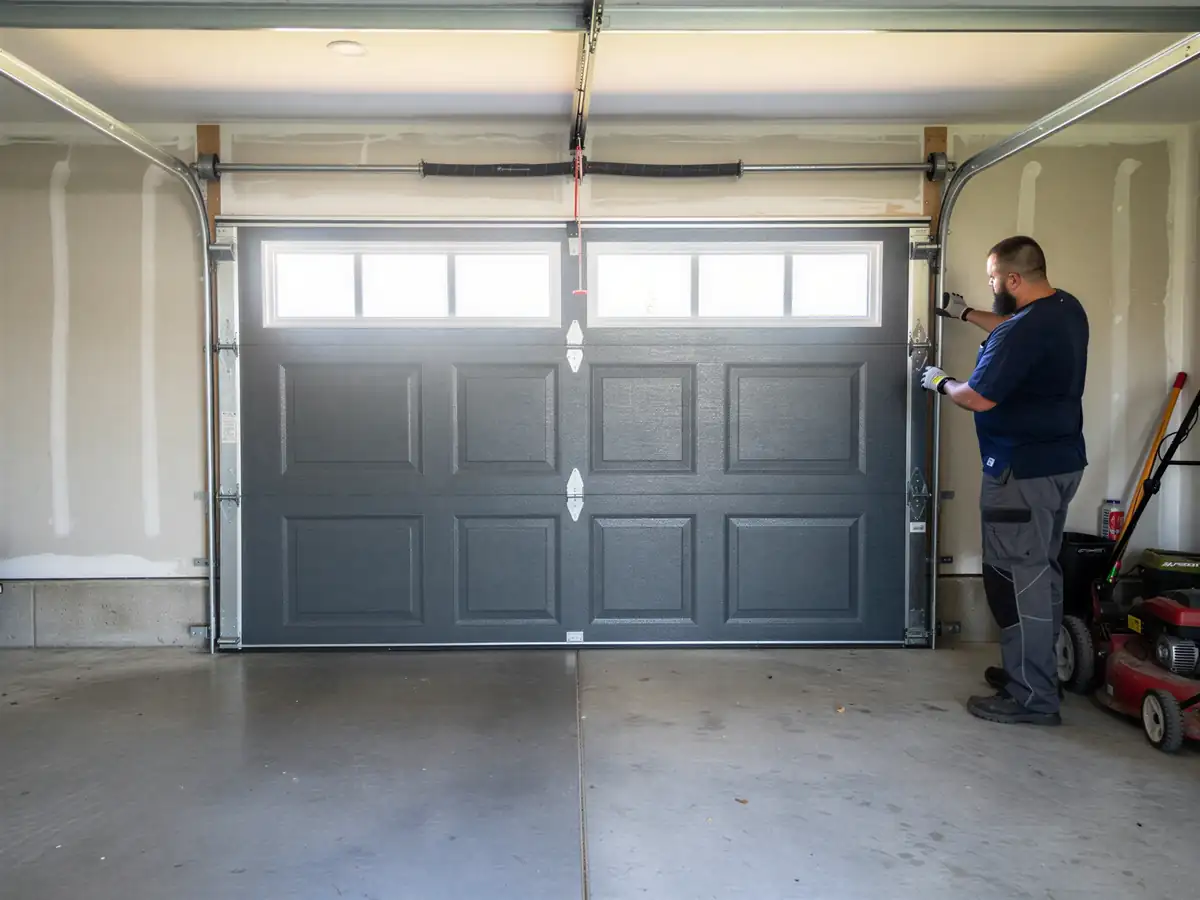
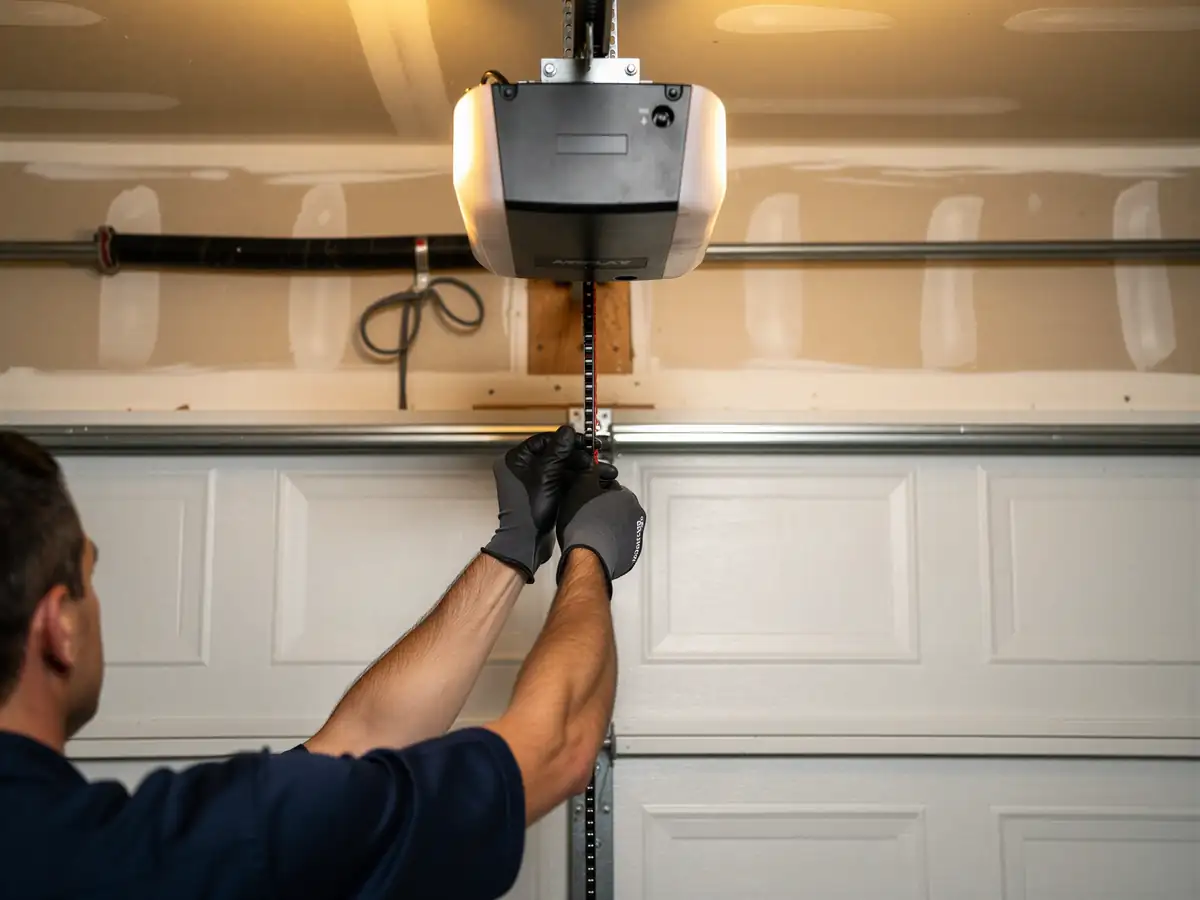
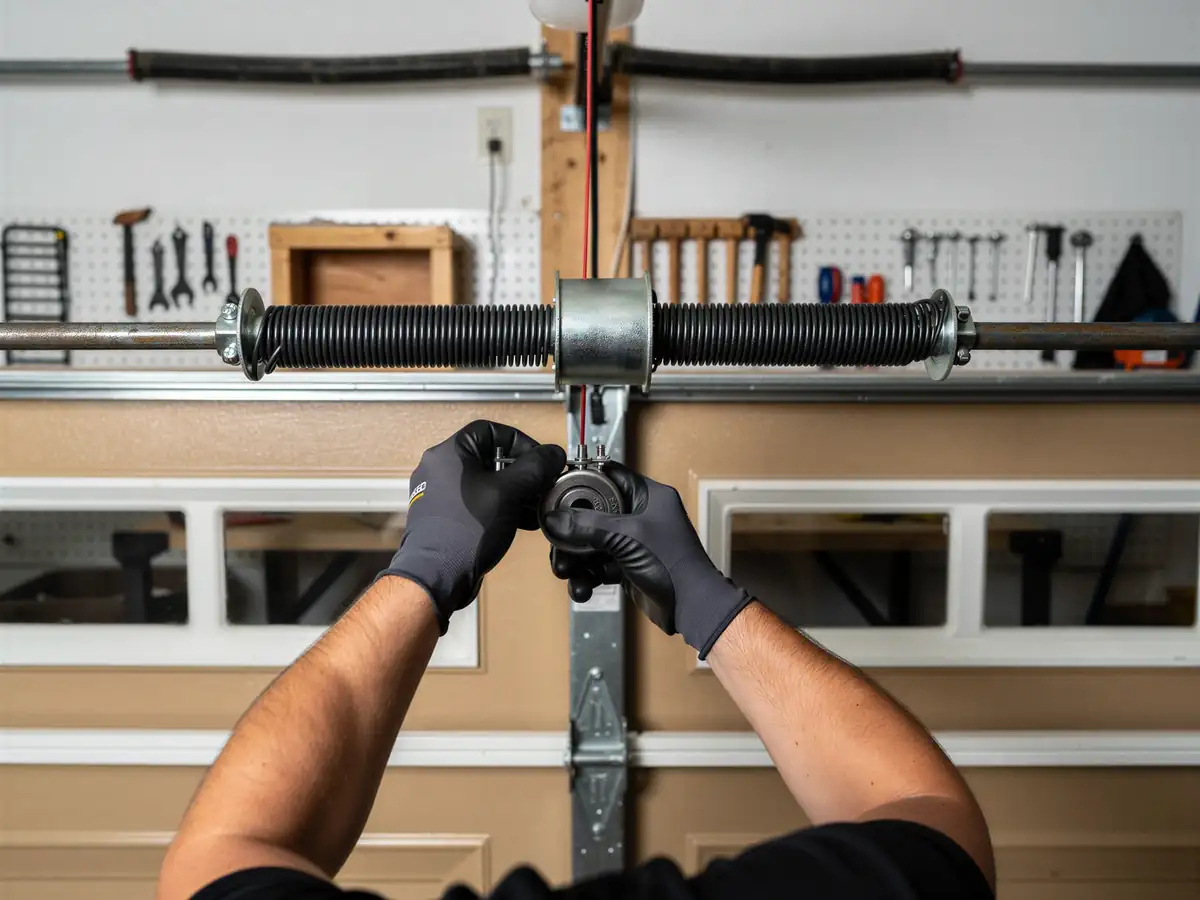
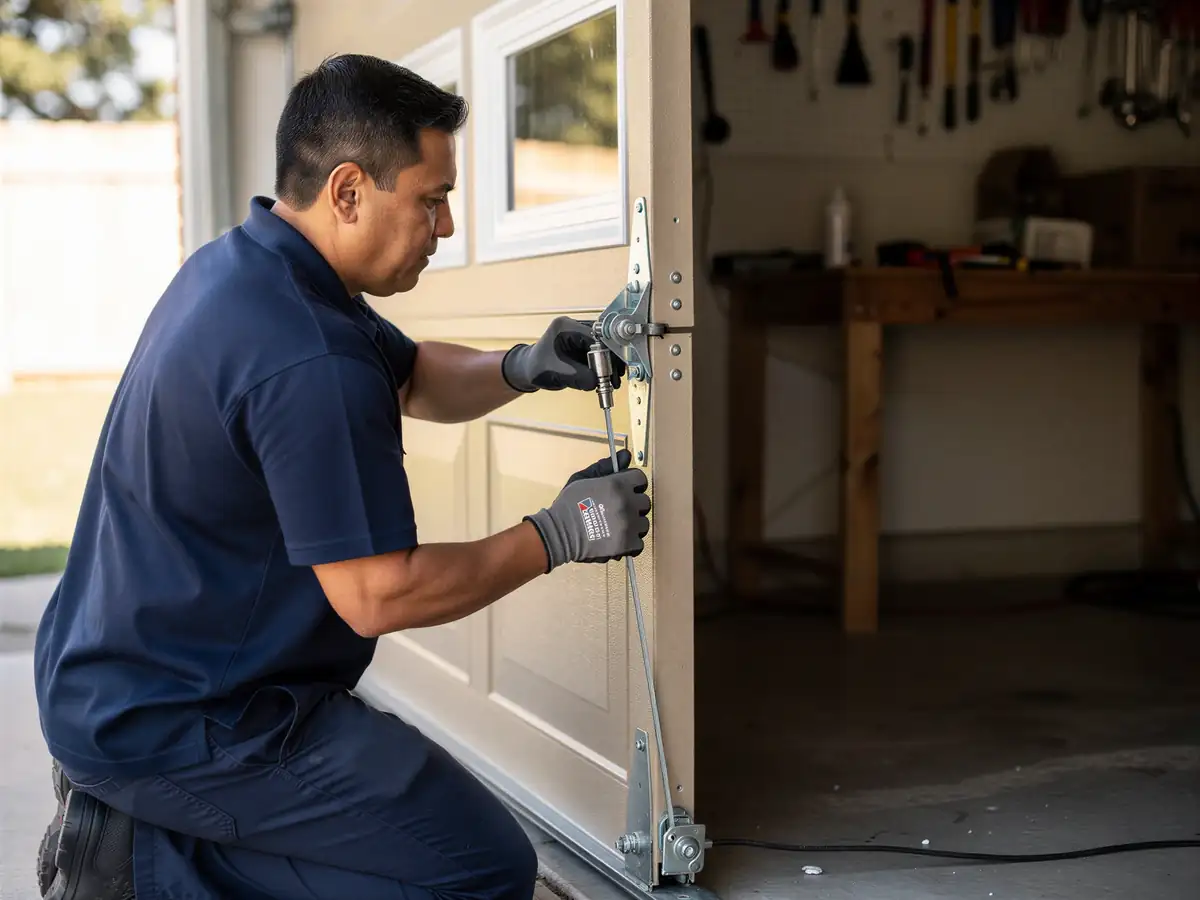
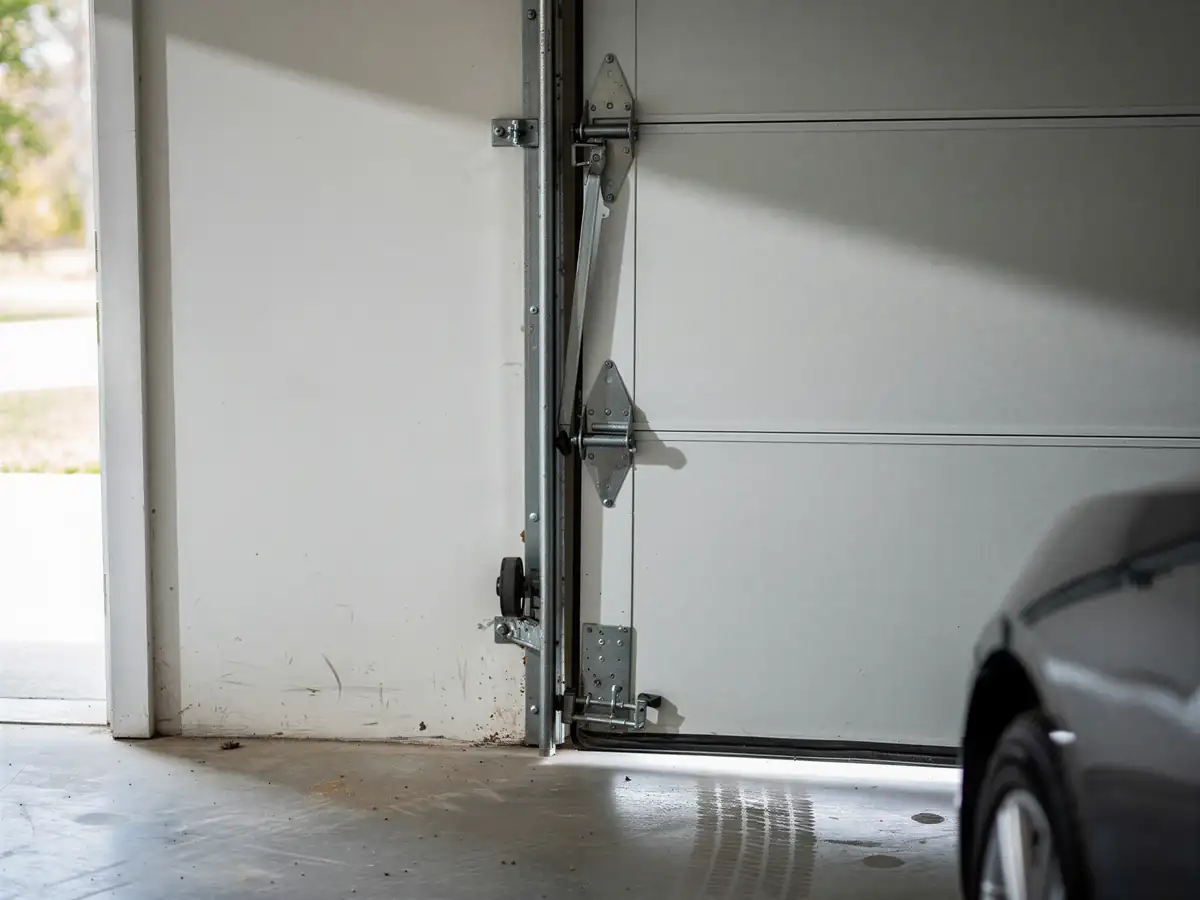
Most calls out here split into three buckets: broken torsion springs, worn rollers and track binding, and opener boards that have given out after a decade or two of cold starts. On a house built around 1973, the springs are often the original wind count and wire gauge, which means we're matching to spec rather than grabbing a universal kit off the truck. Track repair on these older doors usually means straightening or replacing the vertical sections where years of a slightly out-of-plumb door have worn the rollers unevenly - a symptom, not the root cause, so we check the hinges and the track bolts before we call it finished. Opener swaps are usually clean jobs, but on a door that's never been converted to a safer bottom bracket, we flag that separately since it's a different repair with its own parts and cost. One honest limit: if the drum or the shaft is bent, we're not going to force a spring onto it and call it fixed - that's a parts order, and parts for some of these older torsion setups take longer to get than a same-week fix.
What Causes It Around Here
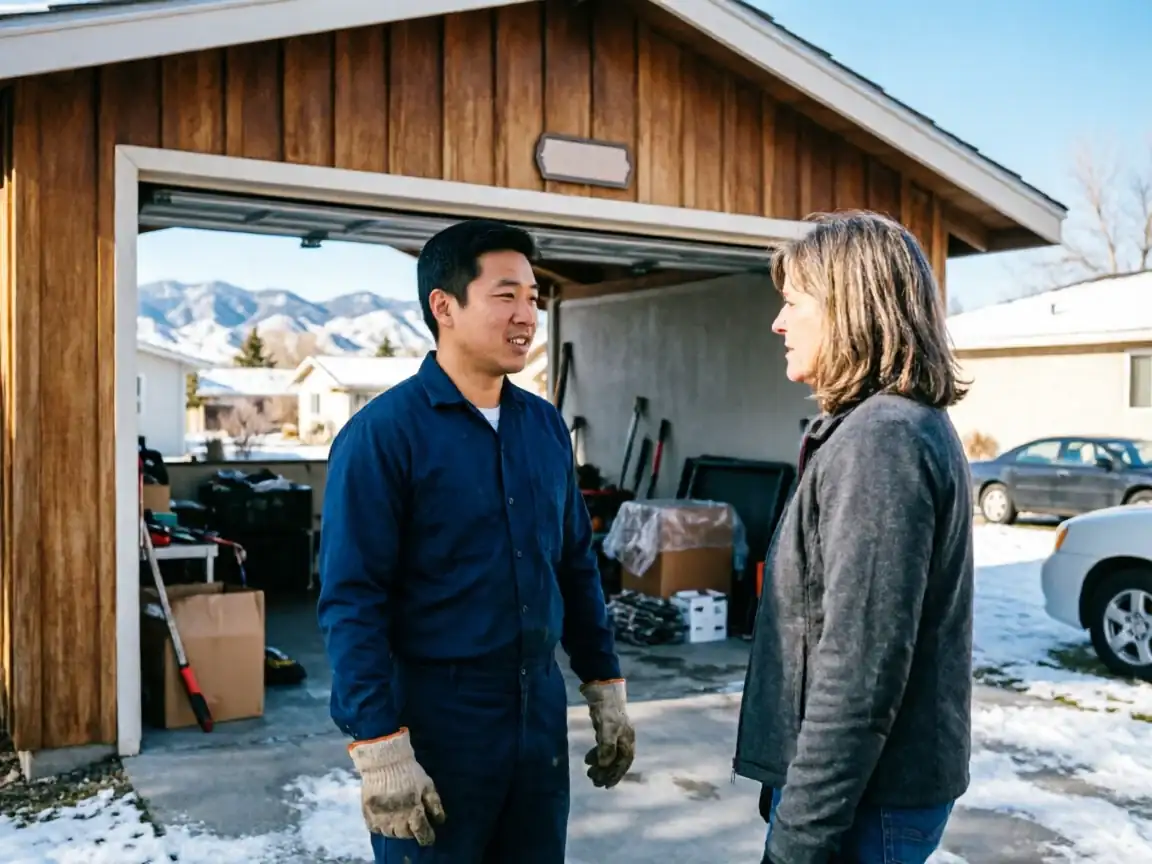
Winters here are genuinely hard on garage doors - this is a cold climate with real temperature swings, and steel springs lose some of their flex as the metal contracts in deep cold. On a spring that's already decades past its rated cycle count, a cold morning is often what finally snaps it, which is why January and February calls spike. Opener boards see the same stress: condensation forms inside the housing when a warm afternoon follows a frozen night, and that moisture is what eventually kills a circuit board that's been fine for years. None of this is unique to any one house - it's a function of age meeting weather, and in a town built mostly in the 1970s and 80s, that combination shows up reliably every winter.