Where This Job Goes Sideways
The drive out to Laurel is 13 miles from the Billings shop, which matters more for this job than most. A broken spring call is never urgent in the sense of danger, but it is urgent in the sense that nobody drives a door down with cars trapped inside it. When a spring lets go on a Laurel garage, the homeowner is often boxing in a truck or two, and the fix has to happen in one trip, with the right spring size already on the truck, because there's no running back to a local supply house. That's the first thing that goes sideways on this job if it's not planned for: someone shows up with the wrong wire gauge for a 1970s door and has to make the drive twice.
The other way it goes sideways is misdiagnosis. On a door this old, a spring that looks broken might be a symptom - a worn cable drum or a bent track taking the load off the spring unevenly until it snaps. Billings-based crews who know this area's housing stock check the whole system before replacing just the coil, because replacing a spring on a door with a bad drum means doing the job twice within the year.
What the Fix Involves
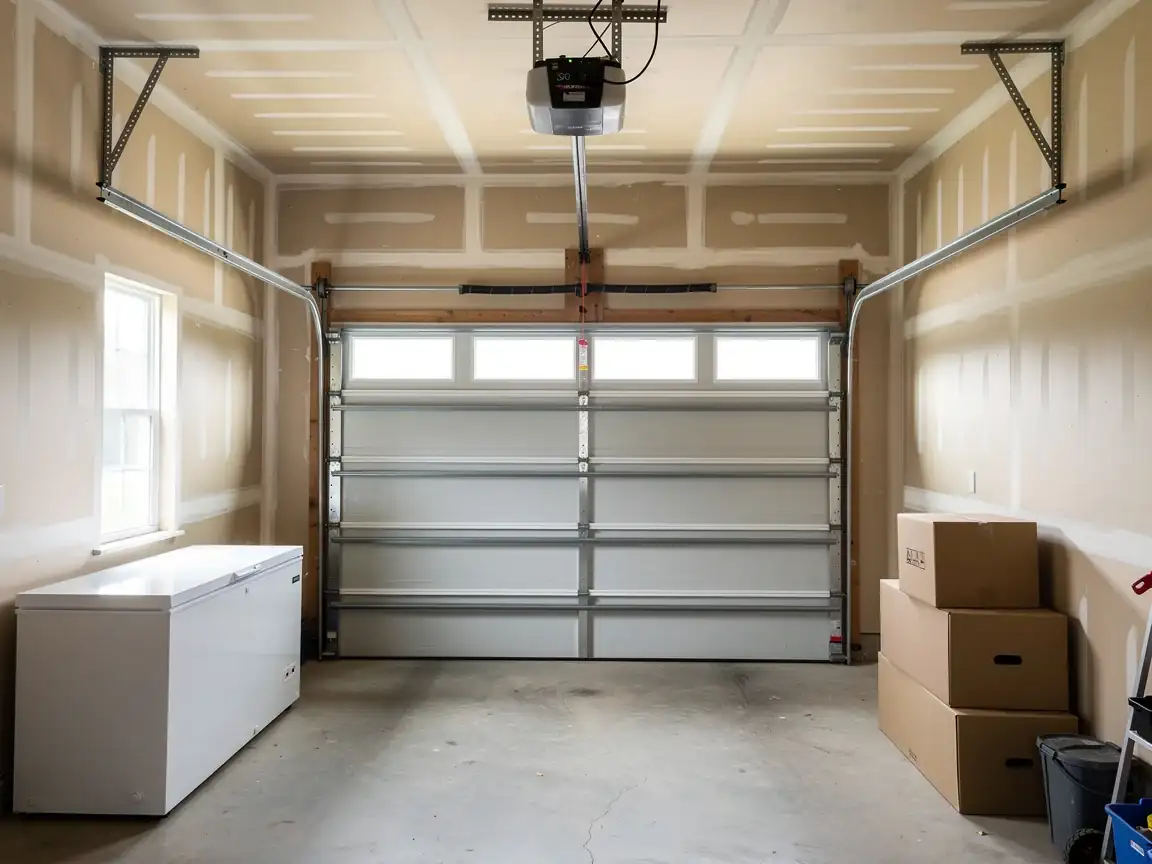
Most Laurel houses were built around 1973, which puts the garage doors squarely in an era of torsion springs mounted on a single center shaft above the door, sometimes paired with older extension spring setups on the side rails if the door was never upgraded. The fix starts with measuring the broken spring - wire diameter, coil length, inside diameter - because a mismatched spring either won't lift the door evenly or will wear out the opener trying to compensate.
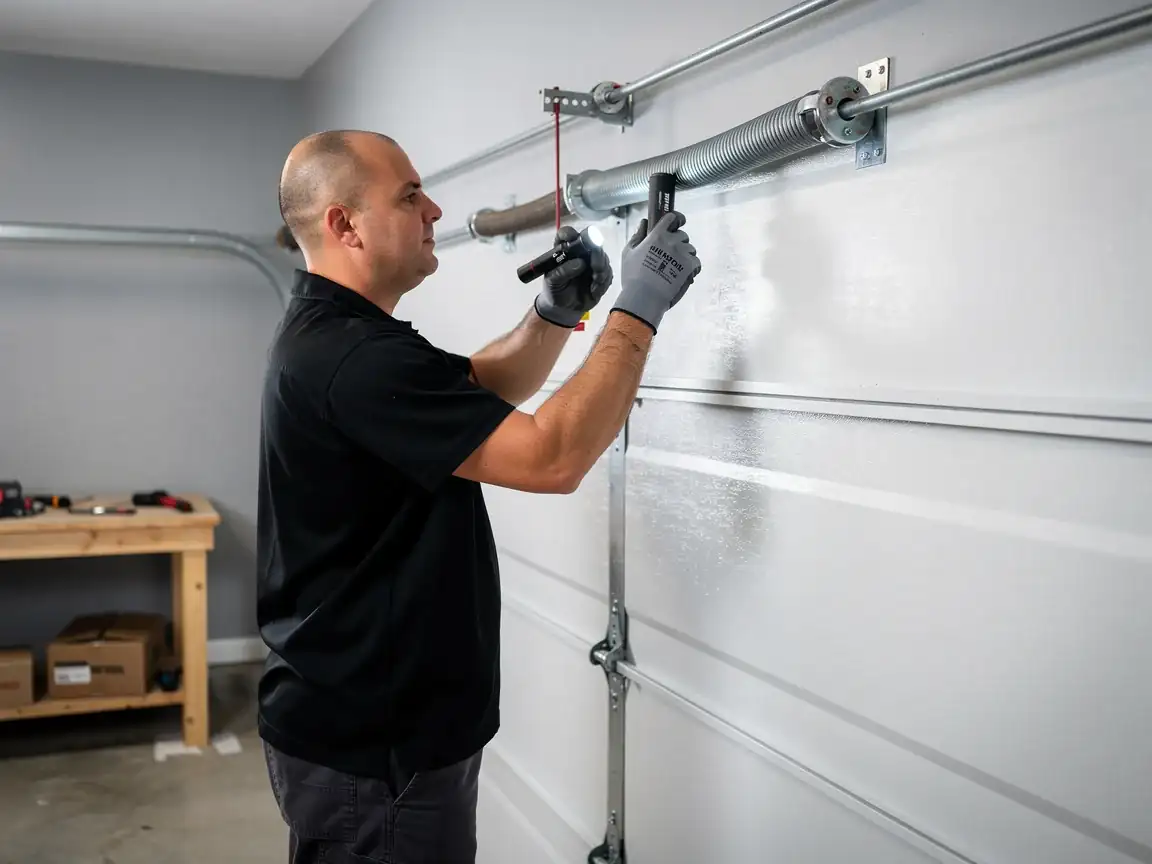
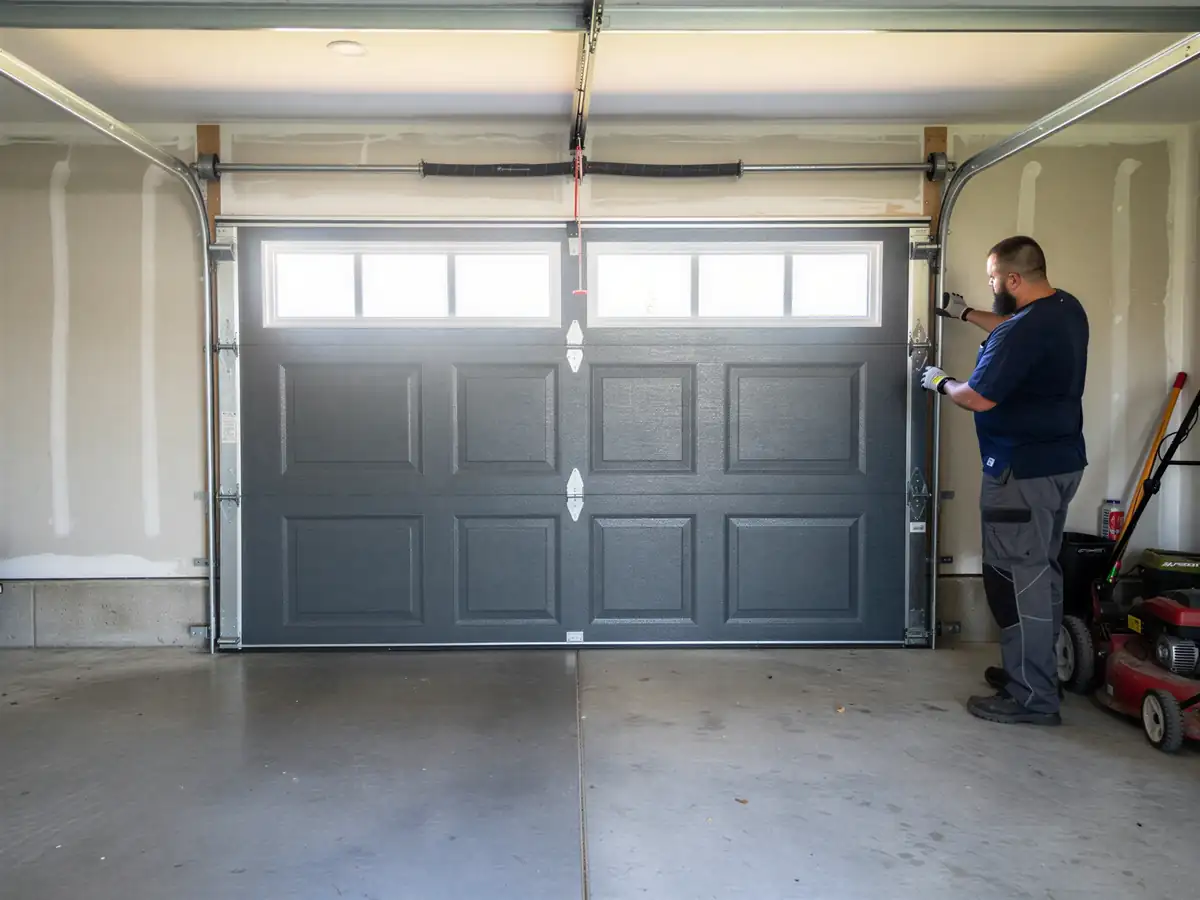
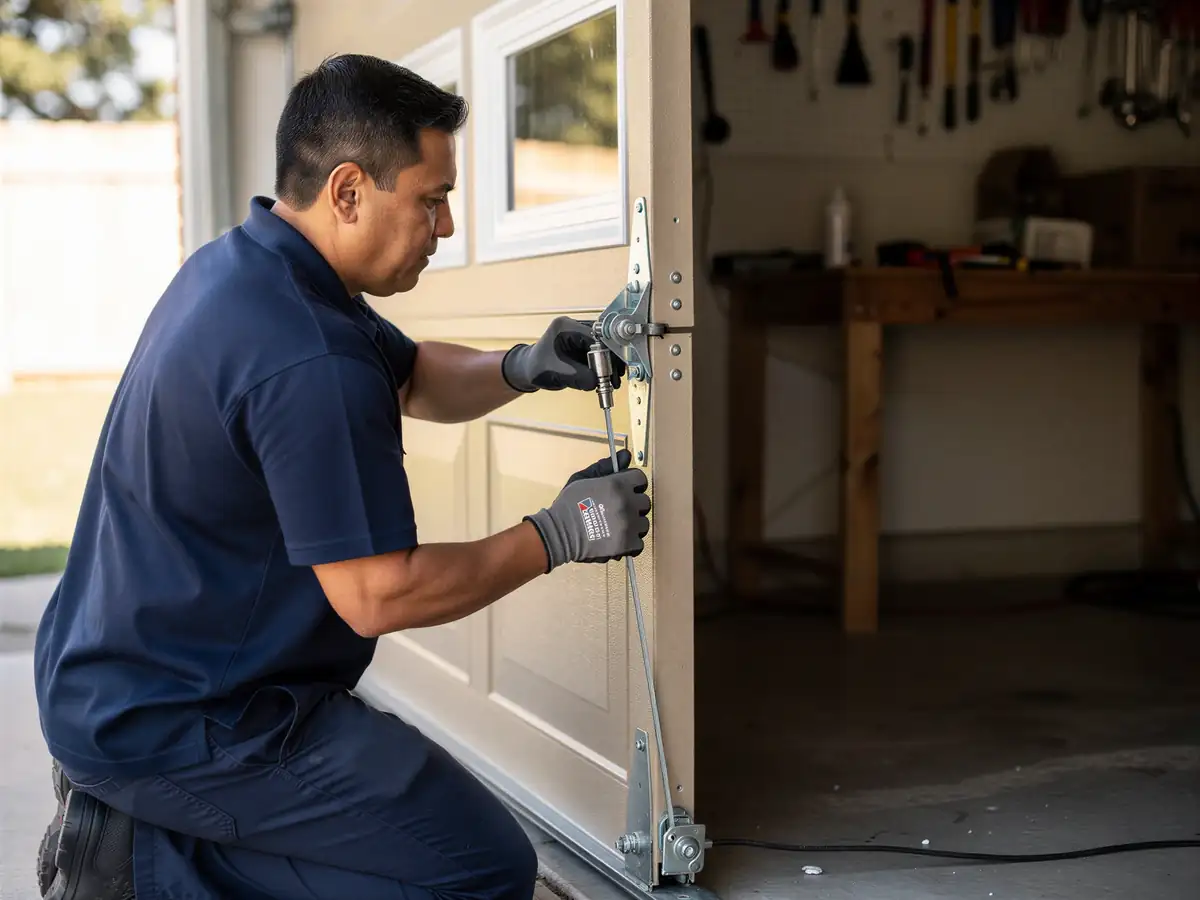
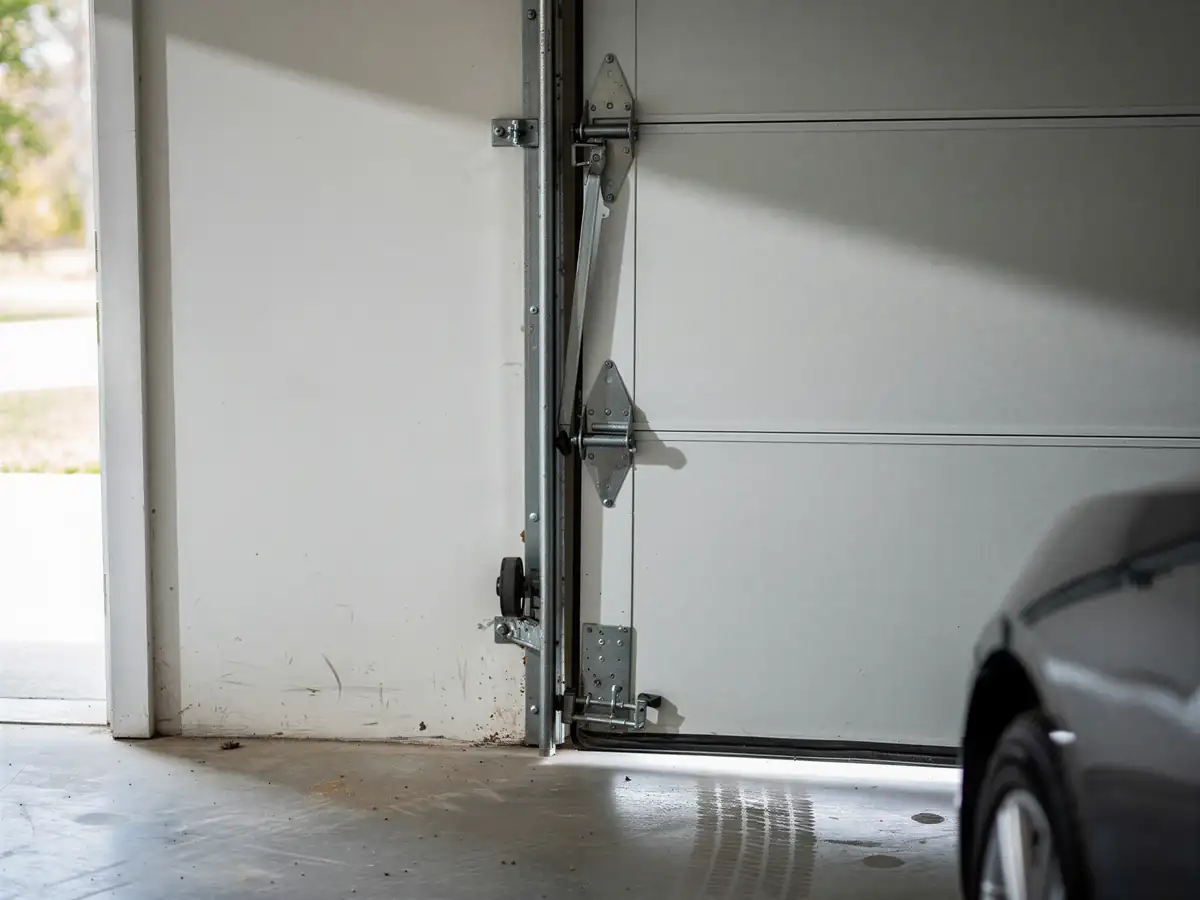
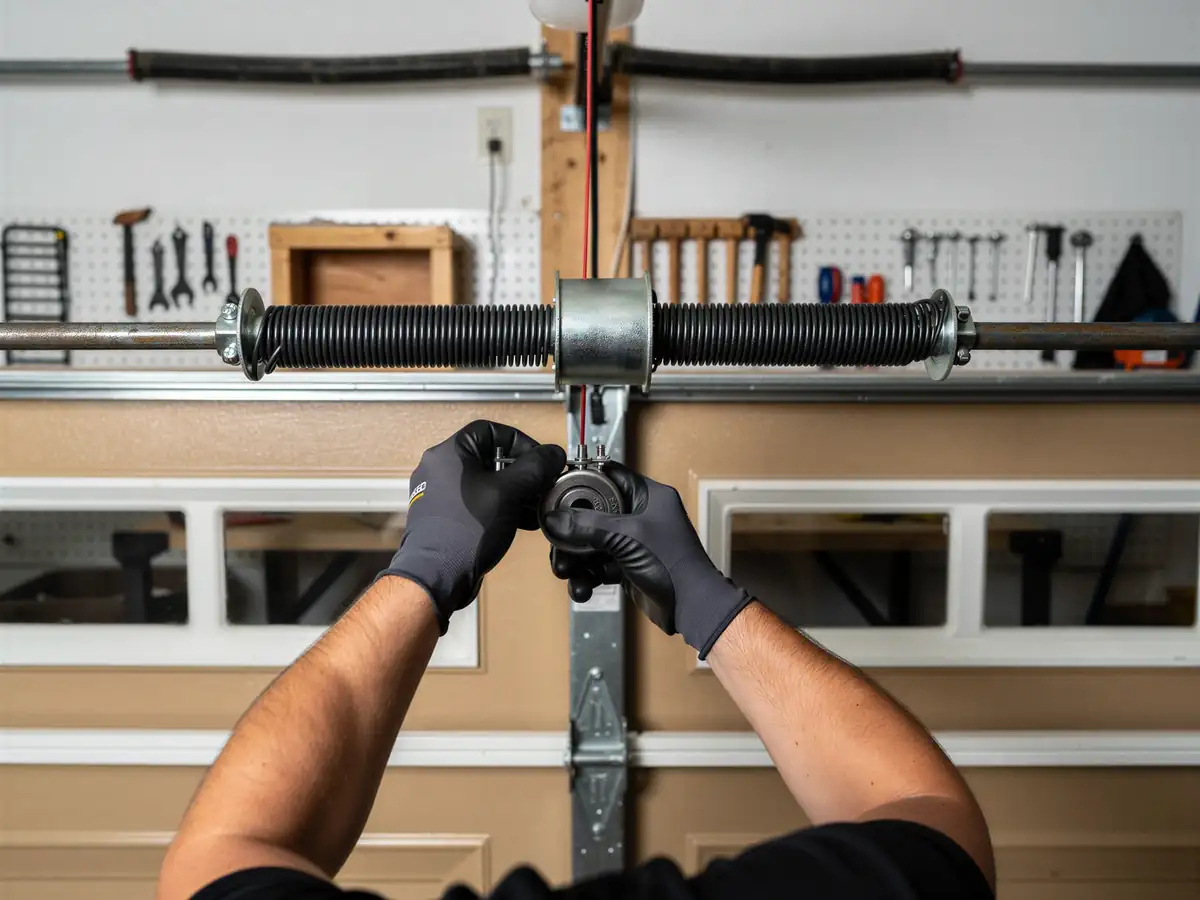
On a torsion setup, that means winding bars, a correctly sized replacement spring rated for the door's weight, and a check of the cable drums and center bearing while the door is already open. On extension spring doors, which still turn up on unmodified original installs from this era, the job includes checking the safety cables that keep a broken spring from becoming a projectile across the garage. Either way, the opener gets tested afterward - force settings on a 50-year-old door often got adjusted around a failing spring over the years, and leaving that setting alone just sets up the next failure.
Doing It Yourself
A torsion spring holds enough stored tension to break a hand or worse if the winding bars slip
And that doesn't change because the house is in Laurel instead of somewhere with a hardware store two minutes away. This is one job where the honest answer is: don't. Extension springs are lower-tension but still dangerous without the right clamps, and guessing at spring size from a hardware store bin is how a door ends up lifting unevenly and racking the track.
What a homeowner can reasonably do is diagnose
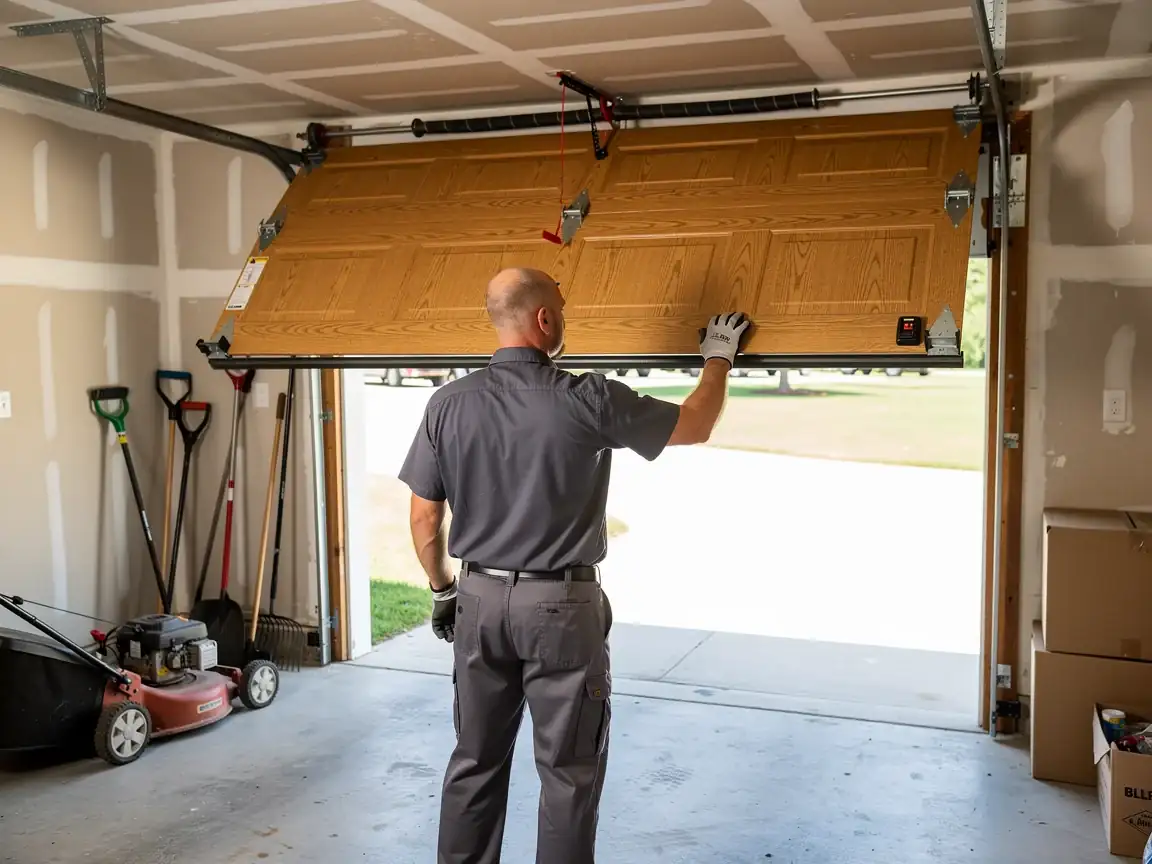
If the door won't budge and the opener strains or reverses, that's consistent with a broken spring, not a motor problem. If one side of the door looks lower than the other when it's open a foot, that often points to one spring in a two-spring torsion system still holding while its partner failed - a half-broken system that still needs both springs replaced together, not patched on one side.
What Causes It Around Here
Laurel's housing stock is older on average than much of the wider Billings service area - 1973 versus a median closer to 1985 across the broader area - and that age shows up directly in spring failure patterns. A torsion spring is rated for a cycle count, usually somewhere around 10,000 open-close cycles, and a door installed in the early 1970s that's still running its original spring has likely blown well past that rating years ago. Metal fatigues regardless of use; springs that sit unused through a Montana winter and then get worked hard in spring cleanup season often fail right at that seasonal switch.
The cold is a real factor too. This area sits in a severe cold climate band, and steel contracts in deep cold, making a spring at the end of its life more likely to snap on the first truly cold morning rather than gradually weaken. Combine original-era hardware with winters that stress-test it twice a year, and Laurel sees more end-of-life spring failures on unreplaced original springs than a newer subdivision would.