Where This Job Goes Sideways
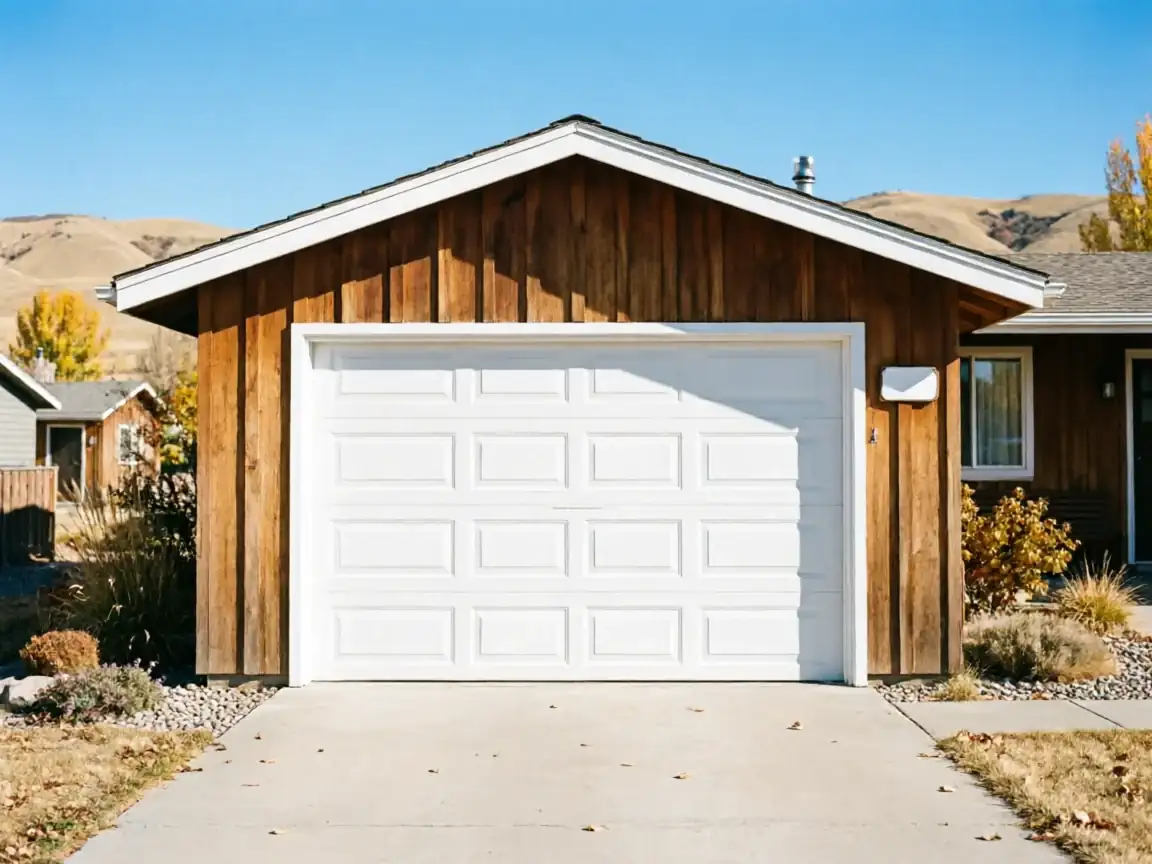
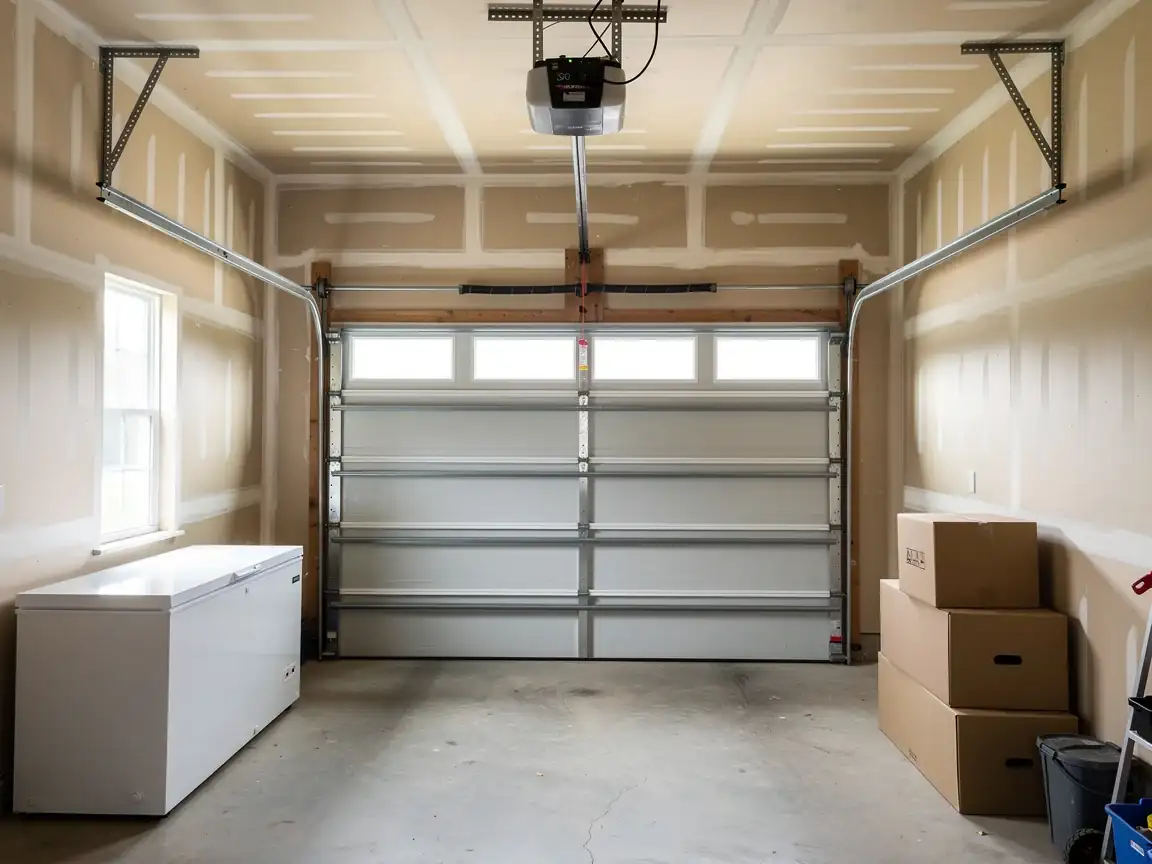
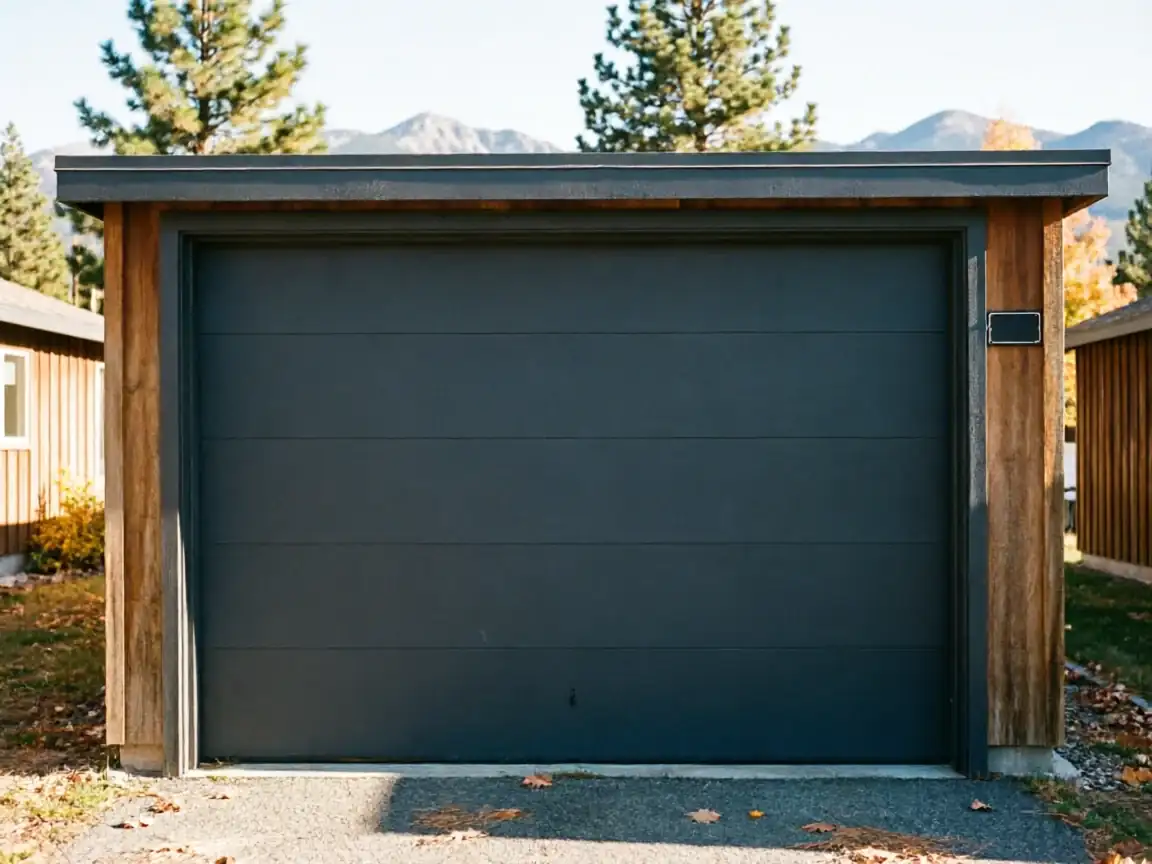
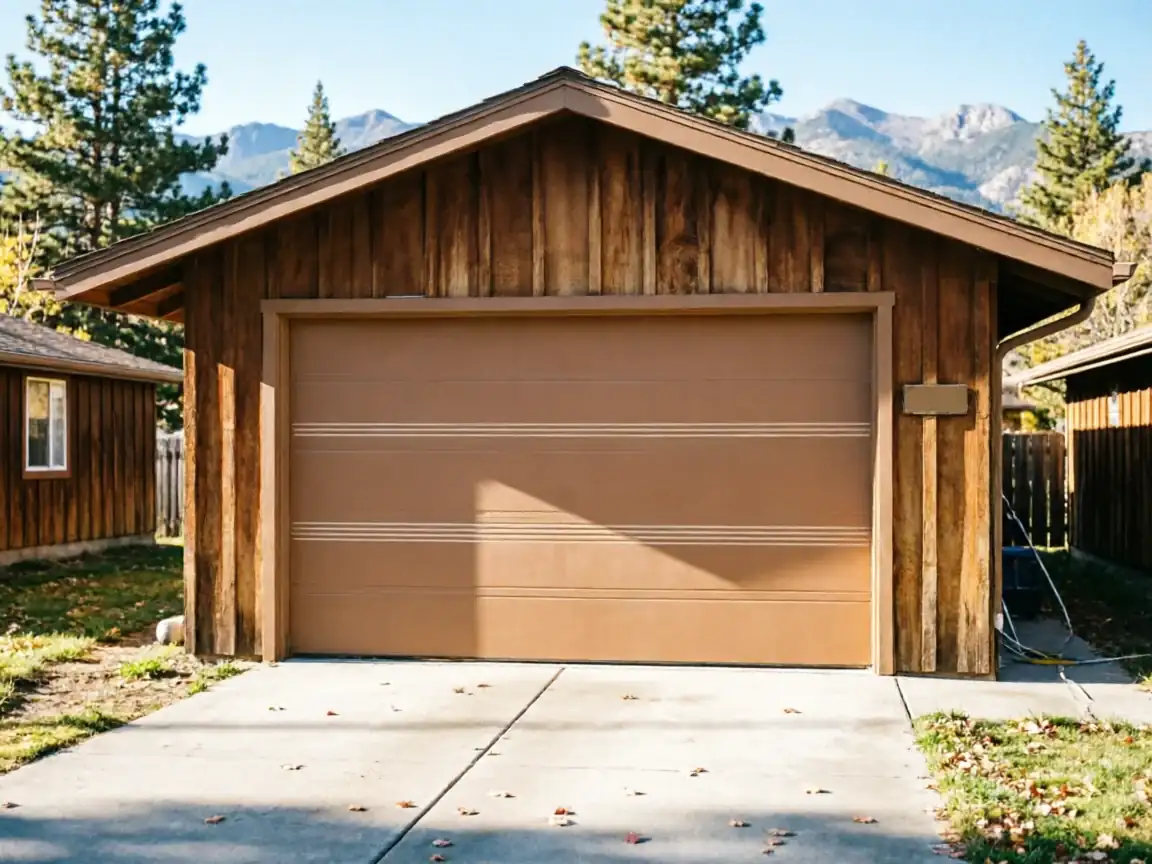
Most houses in Laurel went up around 1973, which puts a lot of original or first-replacement steel doors on the street - single-layer panels, 16-footers over two-car openings, 7-footers on the single bays, hung on steel track that's been bolted to the same jamb for five decades. That track was fine for the door it was built with. It's not always fine after fifty winters of expansion and contraction, or after the day someone backs a truck bumper into the bottom panel and bends the rail two inches out of true.
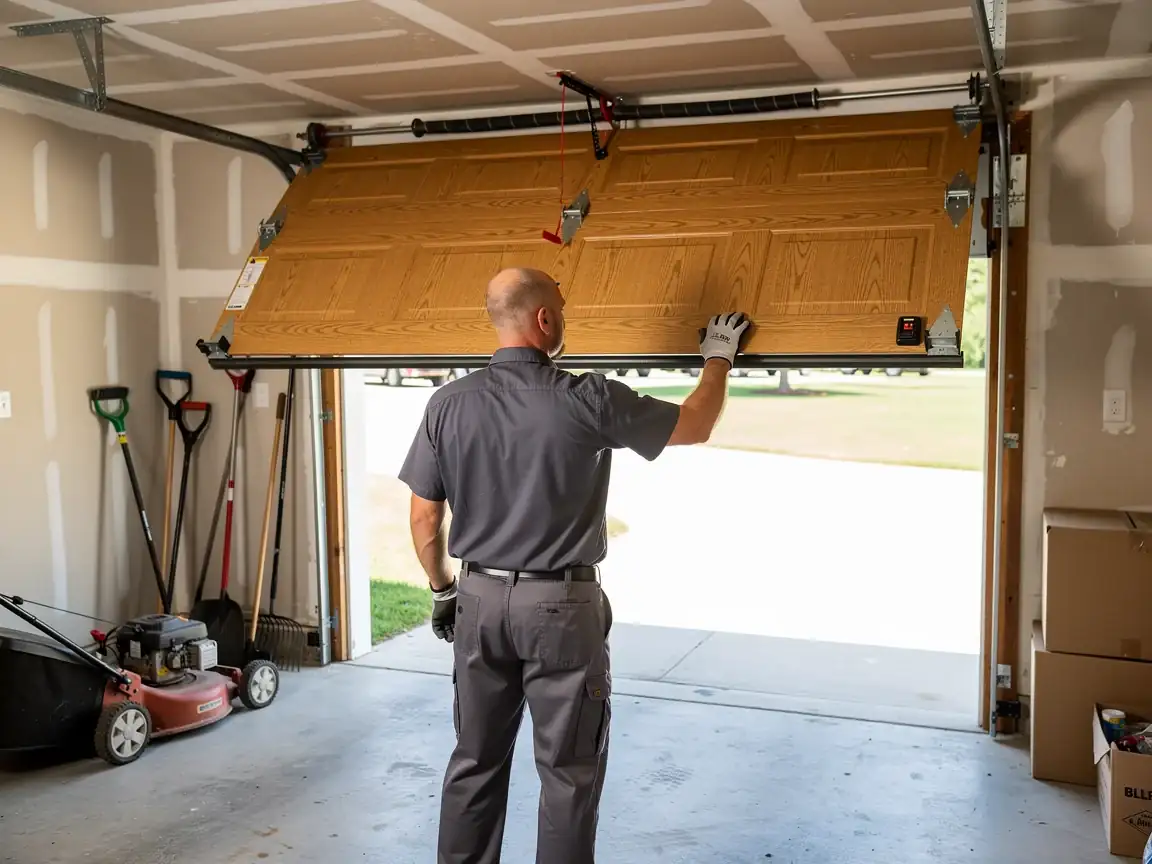
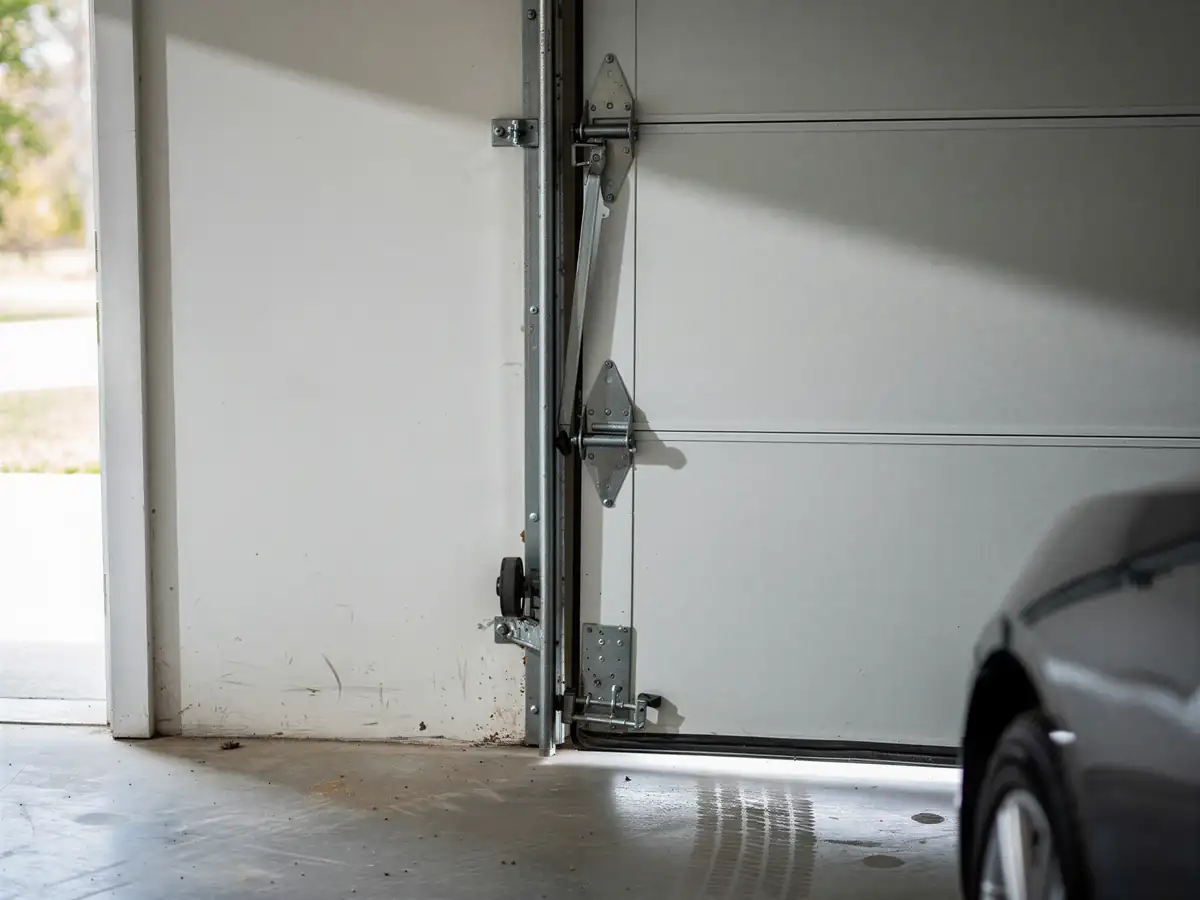
The door comes off track in one of two ways. Either the rollers jump the rail because the track itself has pulled away from the frame - the lag screws loosen in wood that's dried out over the decades - or the door gets forced off because something hit it or the opener kept pulling after a roller caught. On a door this age you'll often see both problems at once: loose track plus a roller that's worn enough to not sit right even when the rail is straight. Reseating the door without fixing the track just buys you a repeat call.
What the Fix Involves
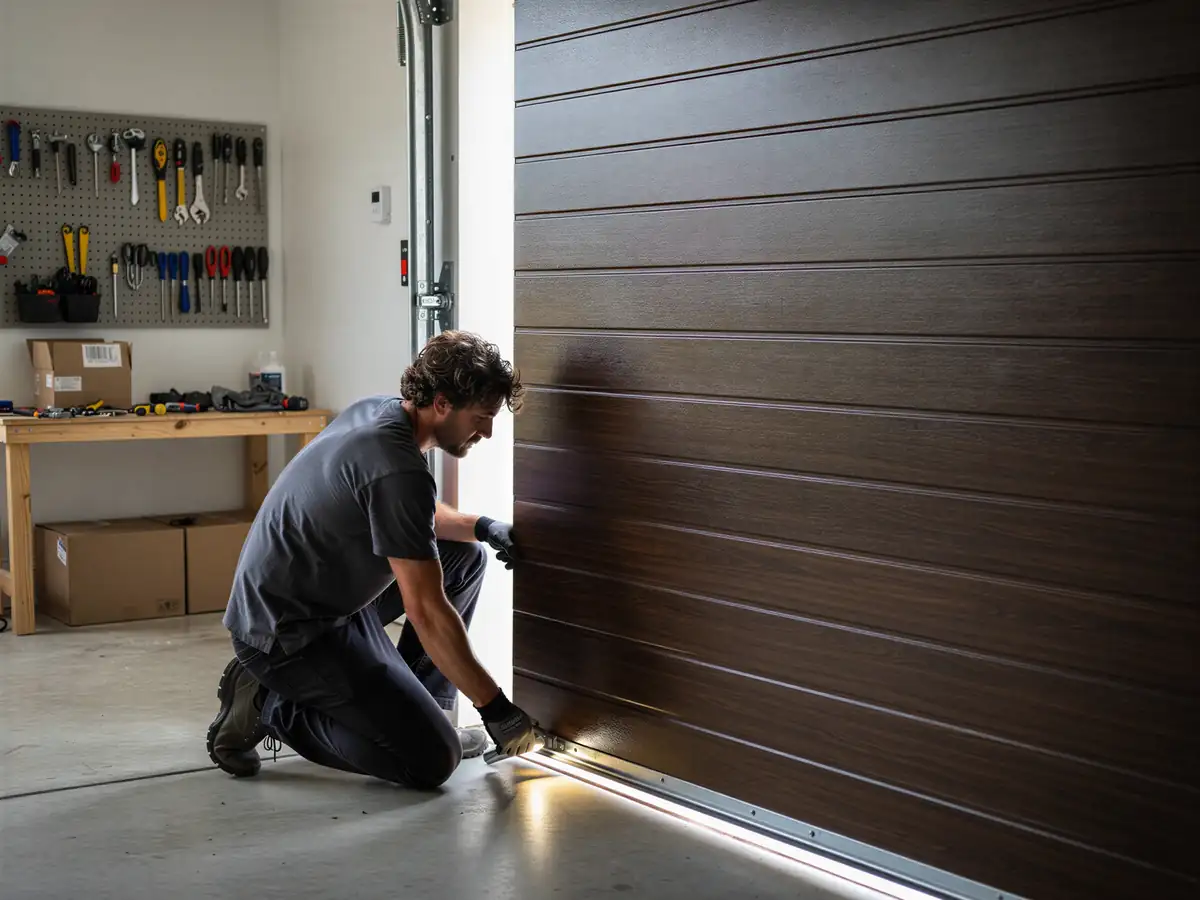
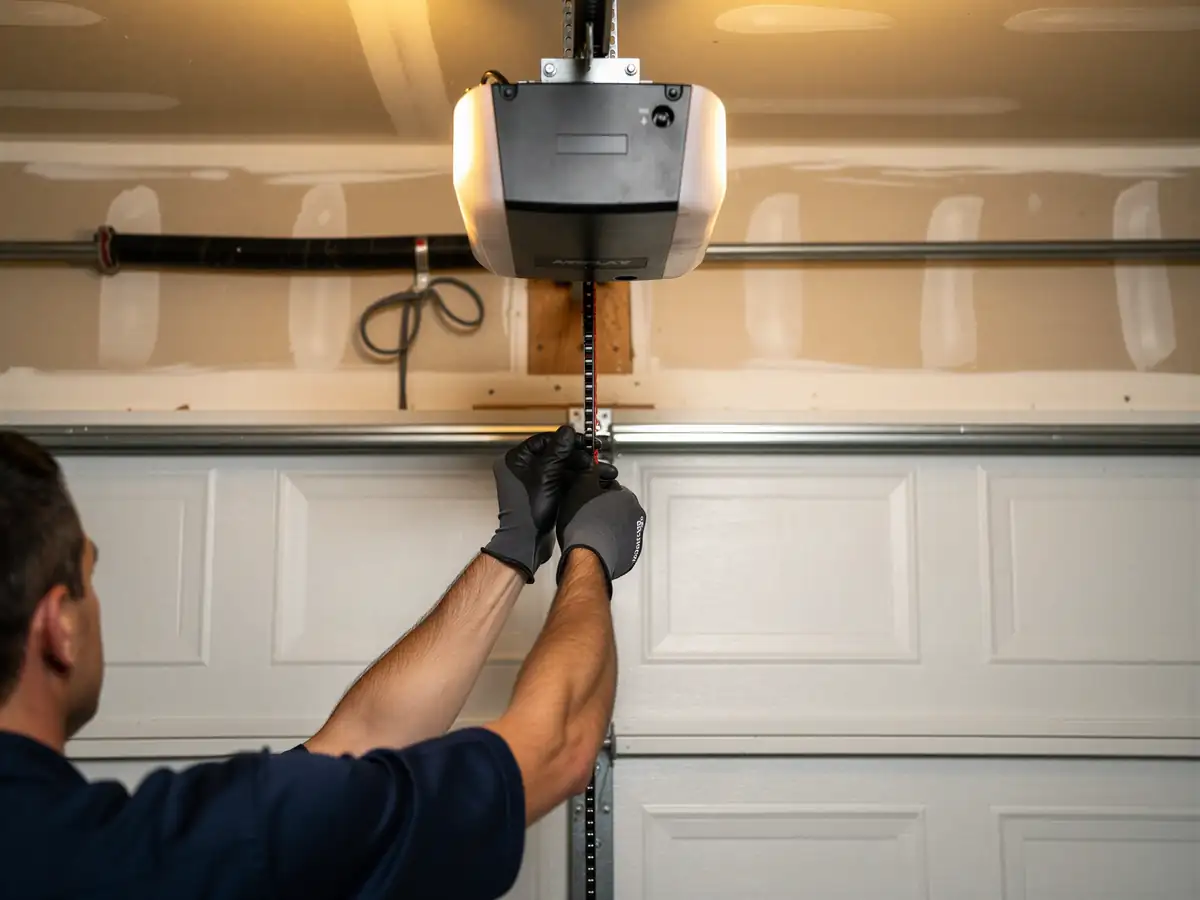
First step is getting the door itself safe - unplugging the opener, releasing spring tension if the door's loaded, and pulling the panel out of the bent section without putting more stress on the track. On a door built when Laurel's housing stock went up, that track is usually light-gauge steel, narrower than what goes on new installs, so matching sections isn't always a shelf item.
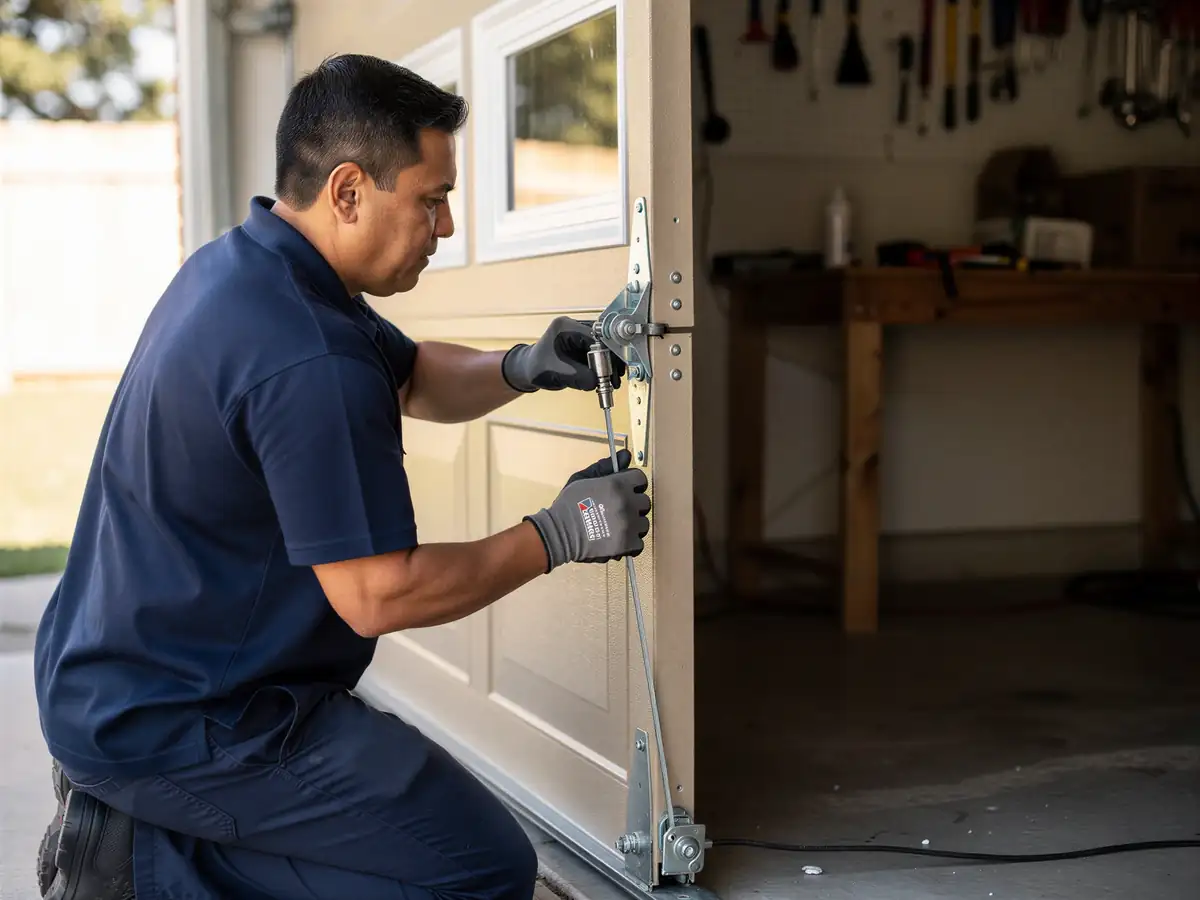
Once the door's down, the rail gets checked for straightness, the brackets get checked for whether the wood behind them still holds a screw, and the rollers get looked at - on original hardware they're often steel rather than nylon, and steel rollers that have worn a groove into the track will keep jumping no matter how straight you get the rail. Sometimes the fix is a cleaned-up rail and new rollers. Sometimes the bracket has to be relocated to sound wood a few inches over, because the original mounting point won't hold anymore. Either way, the door gets tested through a full open-close cycle before anyone calls it done - a door that looks seated but binds halfway through will be back off track within the week.
Doing It Yourself
Checking for the obvious is fine and worth doing before you call anyone
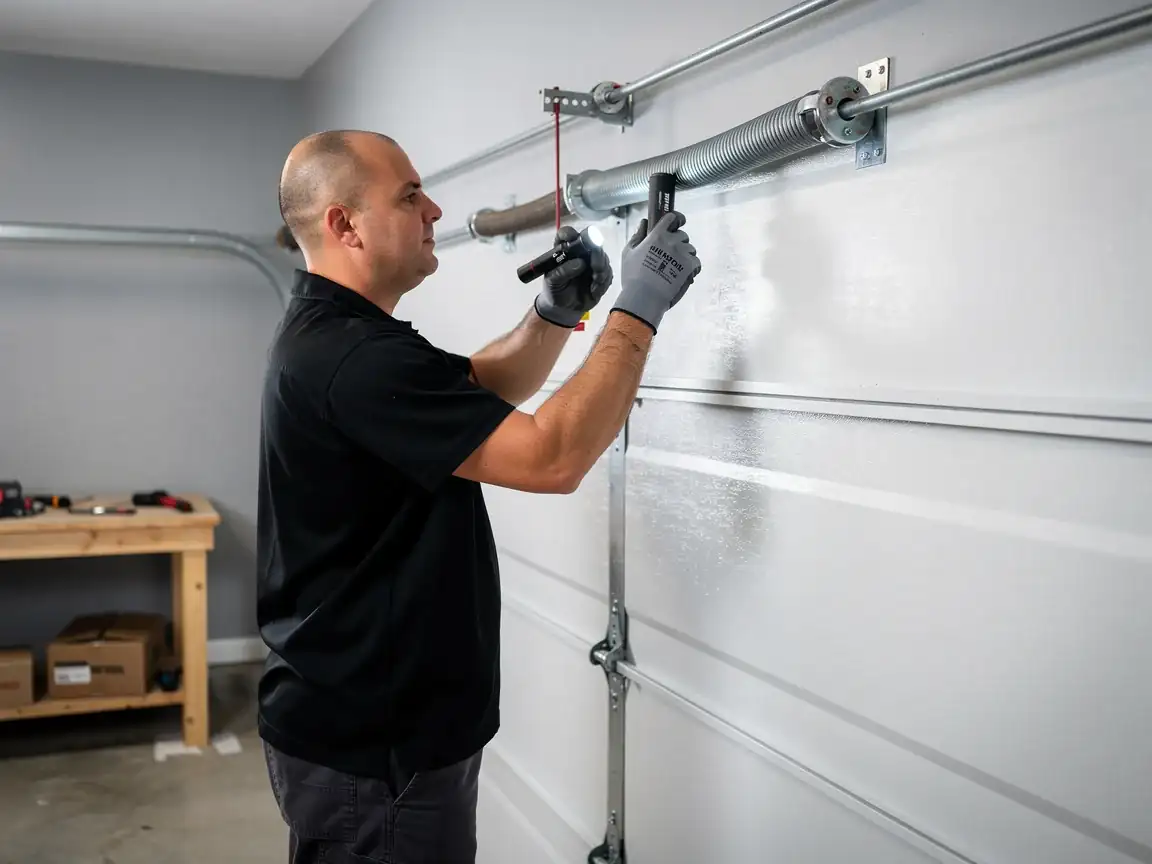
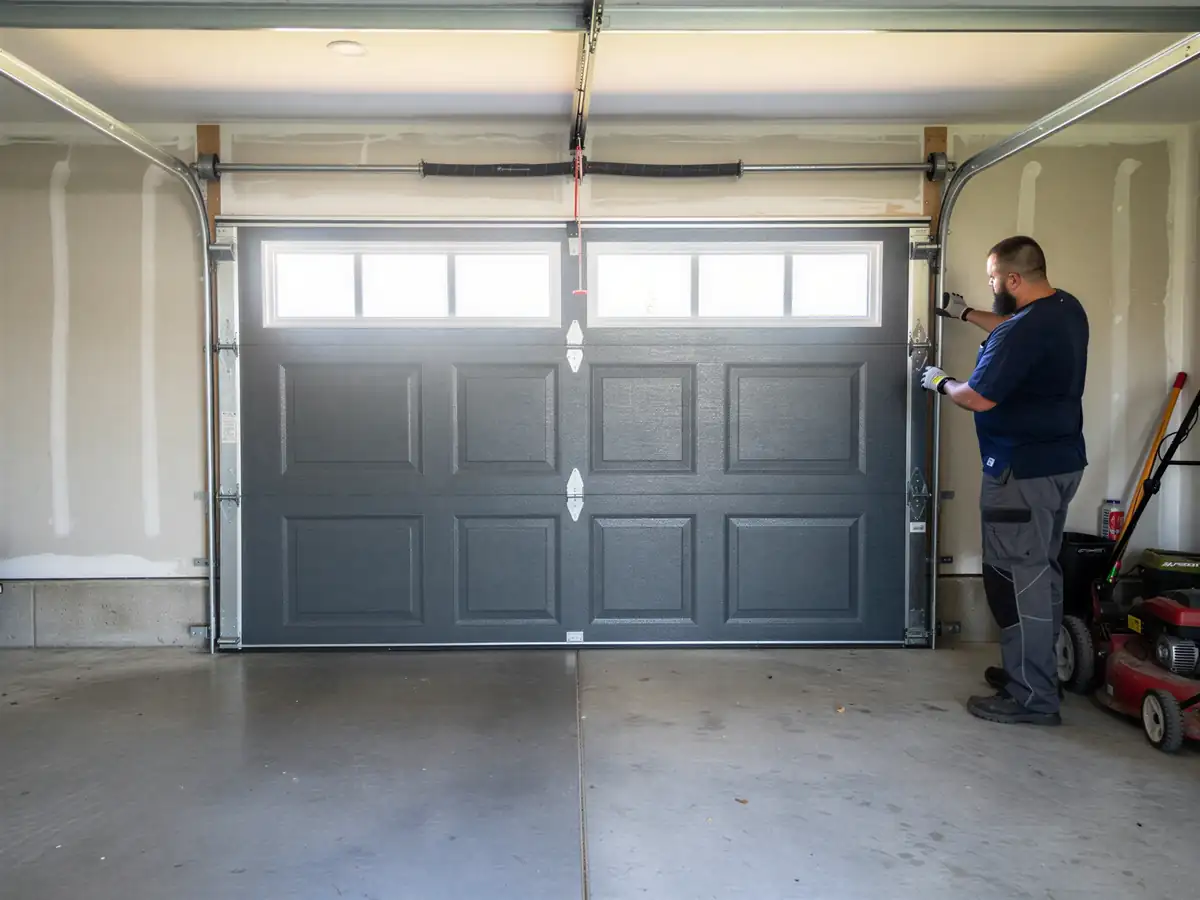
Look at the track for a visible gap between the rail and the frame, look at the bottom brackets for rust or loose screws, and see if the door runs smooth by hand with the opener disconnected - a door that catches or scrapes partway up is telling you where the problem is.
What isn't worth doing yourself is putting the door back on the rail or touching anything near the springs
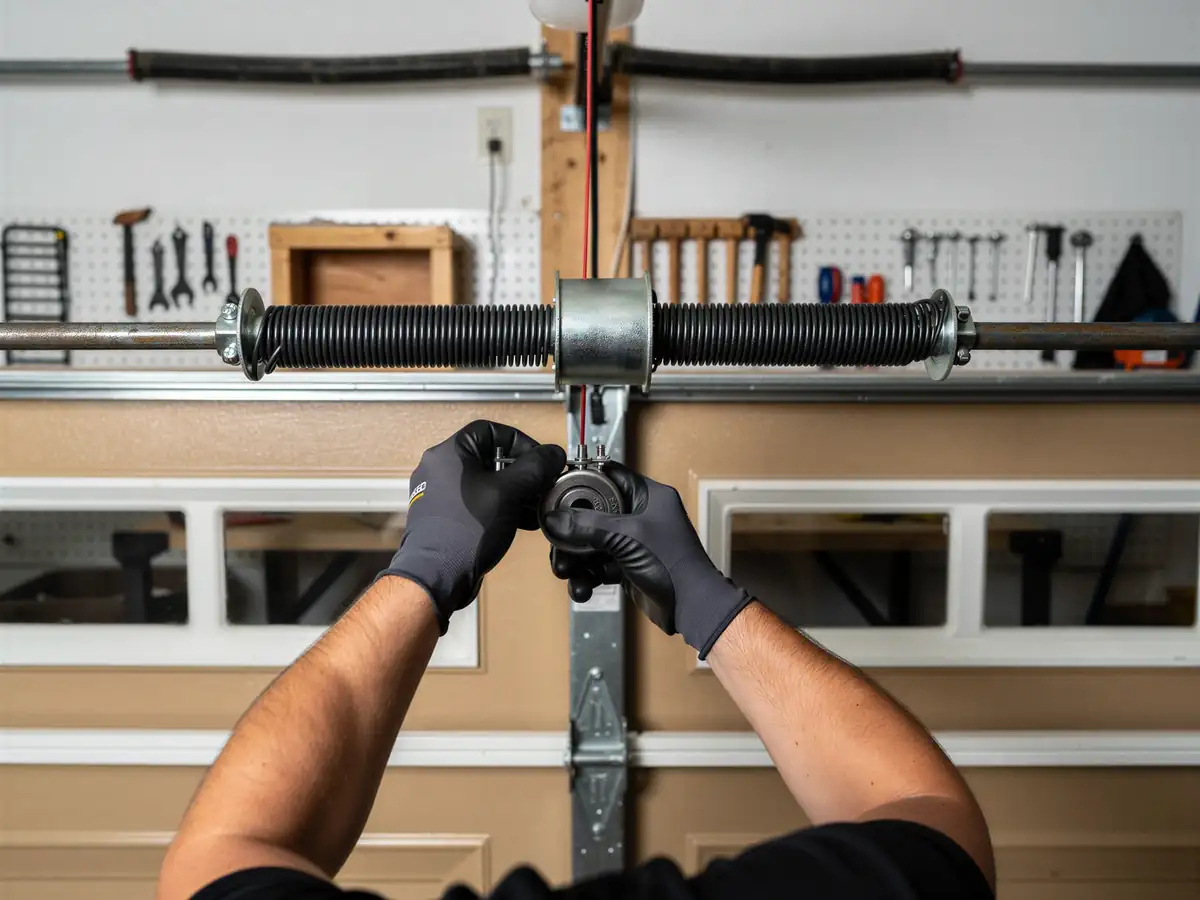
A door this size, off its track, under spring tension, has enough stored force to break a hand or worse, and there's no safe way to learn that lesson on the first try. If the track is bent rather than just loose, straightening it yourself usually makes it worse - steel track work-hardens where you bend it, so a second bend in the same spot is weaker than the first. That's the honest limit here: minor loose-screw fixes are a reasonable DIY job, anything involving the rail shape or the springs isn't.
What Causes It Around Here
The cold is the other half of this. Laurel sits in a severe cold climate band, and steel track contracts in deep cold the same way everything else metal does - a rail that was snug in August can have slightly more play in January, enough for a roller riding close to the edge to walk off during a hard stop. Add ice buildup at the bottom of the track, which happens here most winters, and a door that's closed on a packed ridge of ice can get pushed off the rail trying to seat.
On the older stock that makes up most of Laurel - built when the rest of the area's housing was still a decade or two off - the track hardware has had more winters to work the screws loose and more cycles to wear the rollers down. It's less about any one storm and more about fifty-plus years of that same cold doing it a little at a time. Newer doors elsewhere in the service area with nylon rollers and insulated track brackets don't show this failure nearly as often.